'>

Thursday, 7 May 2020

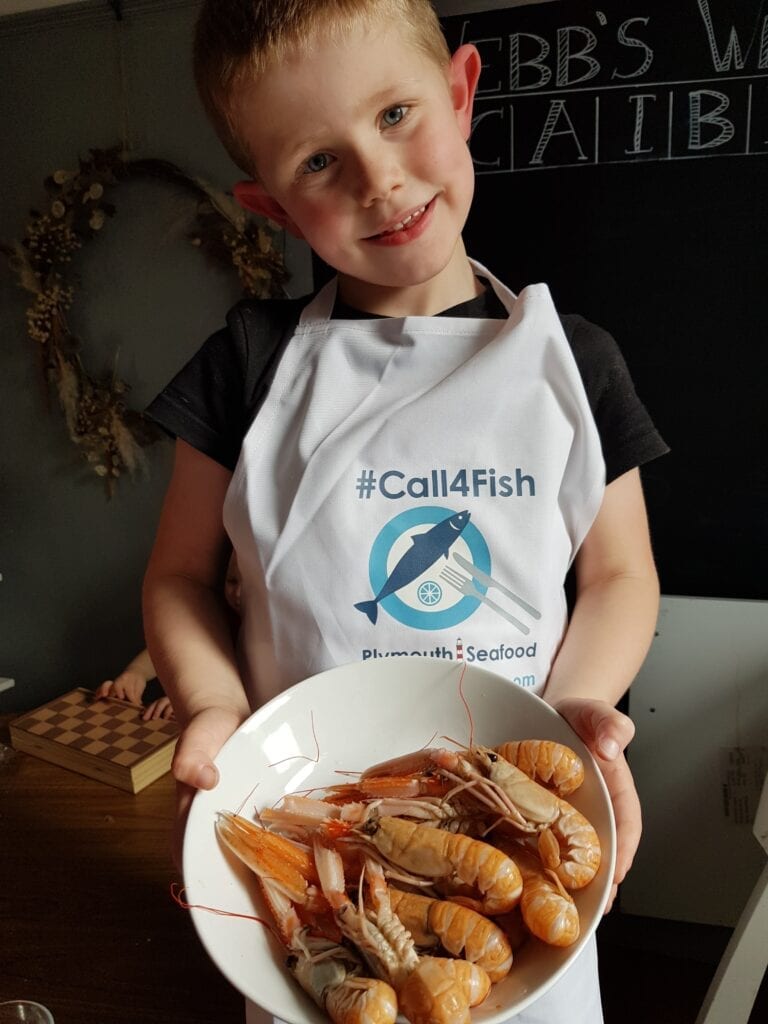
You've seen hake on the fish counter - here's a recipe from Steph Delourme, head chef at Rick Stein's Padstow restaurant.

Seared fillet of hake with pointed cabbage and pancetta,
served with creamy Doom Bar ale sauce.


MAKES QUANTITY:

Serves 4

INGREDIENTS:

4 x 160g Hake fillets

50g salted butter
3tsp salt
½tsp sugar
5 rasps grated nutmeg
2 hispi (hearted or sweetheart) cabbages
1 carrot, sliced into triangles
40g banana shallots, finely chopped
100g pancetta
10g flat leaf parsley, chopped
½ bottle of Doom Bar ale
700ml chicken stock
100g salted butter
30g double cream
1 lemon, juiced
10g whipped cream
Gremolata
100gr flat leaf parsley
Salt
Black pepper
30gr Garlic finely chopped
0.5 lemon juice
1 lemon zest
200gr Olive oil
20gr Pumpkin Seeds

METHOD:

CABBAGE:
• Remove the outer leaves of the cabbage. Cut in half, remove the solid stalk and thinly slice.
• Melt 50g of butter in a saucepan over medium heat, add 2 tsp salt, ½tsp sugar, 5 rasps nutmeg, the sliced cabbage, carrot and shallot. Put a lid on the pan and cook for 5-10 min, stirring frequently to prevent the cabbage from catching.


SAUCE:

• Reduce half the Doom Bar until it almost catches on the bottom of the pan and deglaze with the remaining half, add chicken stock and reduce by 2/3. Add the butter, double cream and lemon.

SERVICE:

Plancha the skinless hake fillet for 2 minutes on each side until golden.
• Warm the cabbage and stir in the chopped parsley.
• Warm the sauce and add the whipped cream.
• Cook the pancetta between 2 pastry trays in a 100 degree oven until crispy and golden.
• Place the cabbage on the plate, place the fillet on top and pour the sauce around. Garnish with the crispy pancetta.

Many thanks for Steph Delourme, head chef at Rick Stein's, Padstow for providing this recipe.

Wednesday, 6 May 2020

Supporting new markets for the UK’s Fishermen


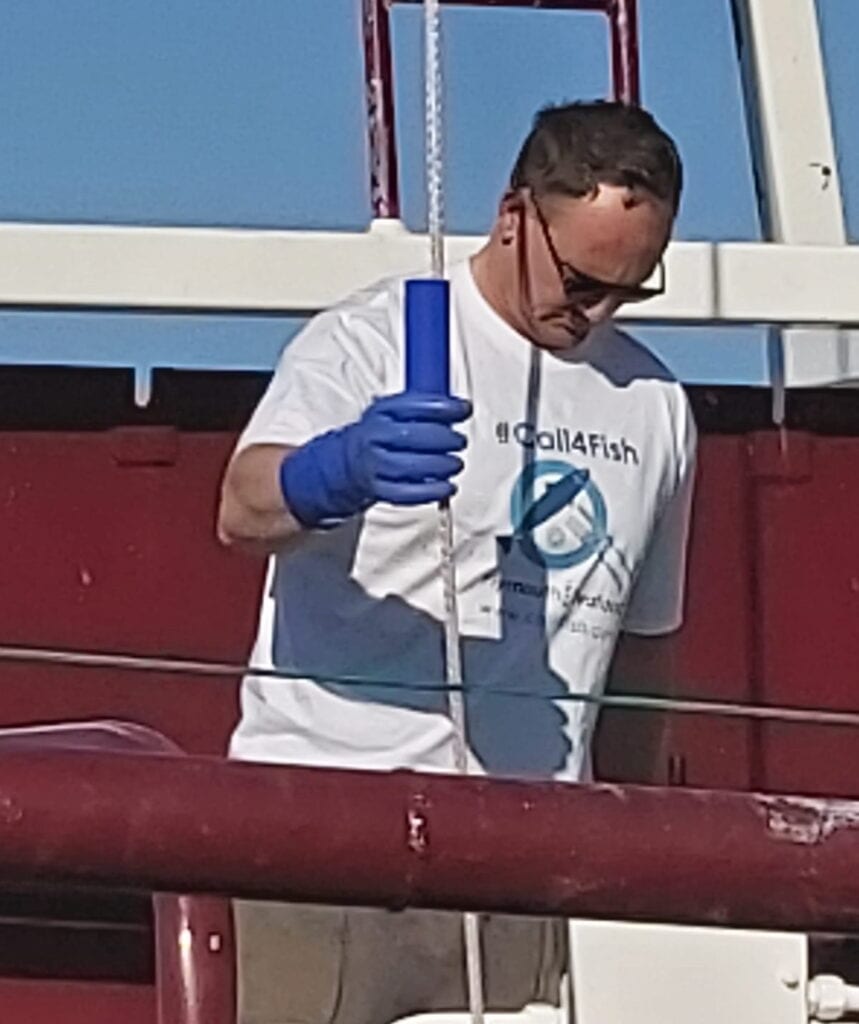
Call4Fish, one of the first projects funded by the Company’s COVID-19 Rapid Response Grant Programme, is working to connect fish merchants with the British public, enabling the home delivery of fish that would have been previously sold to restaurants, hotels or to overseas markets.
Beginning as a project to support merchants at Plymouth market, Call4Fish now supports merchants across the country, supplying direct to people’s houses, providing much needed income as many of their traditional markets remain closed.
“None of this would have been possible without the Fishmongers’ Company and Seafarers UK acting so quickly. In this time of crisis the rapid response, flexibility and easy application process meant that Call4Fish was able to get up and running within 72 hours and prevent many fishmongers in Plymouth and beyond from having to close”
Terri Portmann, Call4Fish
The response from the public has been remarkable. Within the first week of operation, the project dispatched over 1,500 boxes of fish and, with the scheme receiving ever-increasing coverage in the media, this demand is likely to grow even further. Following Call4Fish’s feature on the BBC’s Countryfile, Chantelle Williams from Fresh from the Boat, who supply fresh fish from their family-owned boat, described the scale of response from the British public:


“Fish sales and demand is huge and after Countryfile it seems to have gone mental, with people wanting our fish up and down the country”

As well as Countryfile, Call4Fish has been featured in the Sunday Times and on BBC Spotlight and ITV’s This Morning, helping to drive an increase in consumption of British seafood and supporting the UK’s fishermen and seafood trade through this difficult time.

Tuesday, 5 May 2020

Coronavirus: Fishing 'struggling to survive' lockdown


Workers in Dorset's sea fishing industry say it is struggling to survive the coronavirus lockdown.

With restaurants and pubs closed, commercial skippers Ian and Annie Gilbert have seen the price of fish "plummet" and said their earnings are barely covering food.

And Rob Milton, who farms oysters in Poole Harbour, has gone from producing five tonnes of oysters a week, to none at all.

Film by Talia Slack and Abby Newbery

Le Guilvenec - fishermen return to sea.

Translated.


In Guilvinec (29), almost all the fishermen have returned to sea. The treasuries are at their worst. You have to re-earn your crust, but the restaurants and school canteens of the country are still closed. Supply being much stronger than demand, inexorably, prices collapse. And the fishmongers suffer too.

Solidarity coronavirus Brittany

As the trawlers return, one by one, to the port of Guilvinec, on this Thursday afternoon, the mist rises from the west and gradually replaces the bright morning sun. Already, under the auction, we are agitated. But in silence and with a mask. It is now far away, the time when the crier shouted and waved his abacus for the draw. After a halt at the start of the containment, almost all of the boats have returned to sea. About twenty coastal vessels are expected for the evening sale. Éric Monfort docks with Bérénice II. With his son, they unload the goods, especially lobster. Serious face chiselled by the spray, he notes: "It is getting worse and worse". Mathematical logic, when few boats left, the prices remained correct despite the drop in demand. Now that there is more supply, prices are plummeting. "There is no longer a floor price. The compensating organization can no longer. So we are always afraid of not being able to sell when we arrive at the port. It's only the lobster that saves me, "he says.

Our direct

Shipowner based in Lesconil (29), Julien Le Brun, who owns five coastal trawlers, is moody. "Until Friday, it was okay, but this week, prices have dropped significantly," he said. At his side, on the quay of the port of Guilvinec, Jean-Baptiste Goulard, boss of the deep-sea fishers Pax-Vobis and Copelia, is a little more talkative. "There is not enough demand, that is all. There are almost no more morning sales because there is no market for large volumes. "

“Even if it means dying, you might as well try something. "

Is this situation financially viable? "No, but it's better than nothing. A boat along the quay is worse than at sea anyway, "he said. "To get our guys out of work, we have to get ahead with our company's cash. State money, we know, we'll have it in two years! Personally, I think that if I am three months ahead of my cash, I will file for bankruptcy, "worries the sailor. The fishing bosses are impatiently awaiting the reopening of school canteens and restaurants, but have little illusion. "It's not going to restart like that. It takes time for the consumer to get back to their original life. If we find a balance at the end of the year, it will be good, "he said. Tirelessly, like the others, Jean-Baptiste Goulard continues to sail, despite everything. “Even if it means dying, you might as well try something. At least if it doesn't work, you can't blame me for not having tried. ”

"40% less in Quimper fishmongers"

Live langoustine, place, whiting, mackerel ... The stalls of fishmongers in the Quimper halls are not lacking in products. This Thursday noon, customers are not jostling, however, despite prices close to normal, after an onset of health crisis marked by a short outbreak. Fishmonger for 35 years, Marc Naulet has made his accounts: "Compared to the same period last year, we are at 40% less turnover. "A finding shared by most of the fishmongers in the covered market, forced to close in the afternoon and unable to accommodate regular customers on Saturday, due to health constraints. "On Saturday, there was a line up to the cathedral," said Stéphane Salaün. "The situation is complicated for the management of stocks", continues this other fishmonger. Beautiful pieces, usually ordered by restaurants and for family meals, are also not sold.


Despite the beginning of a recovery in the activity of fishmongers, previously deprived of outlets, Cornish fishmongers currently represent more than 70% of purchases under auction. A reduced activity which forces fishermen to limit their catches to avoid a collapse in prices. Despite a gradual recovery, they only landed 40 tonnes of fish last week, down from around 100 tonnes in normal times.

The consequence of the shutdown of the majority of deep-sea vessels whose fishing usually provides collective catering and mass distribution. Under these conditions, Jean-François Garrec, the Cornish president of the chamber of commerce and industry in charge of fishing ports, predicts a gradual recovery of the market with deconfinement.

Full story courtesy of Le Telegramme.

Monday, 4 May 2020

£500,000 from Seafarers UK for Fishers Impacted by the COVID-19 Pandemic


In response to the COVID-19 pandemic’s impact on merchant seafarers, fishers and their families, the Seafarers UK charity has created a new Seafarers UK COVID-19 Emergency Fund of £2million, with £500,000 immediately allocated to assist fishing communities across Britain.

Included in the grants that have been awarded to charity partners providing advice and support arising from the widespread impacts of the coronavirus are:

£250,000 to provide match funding with The Fishmongers’ Company’s Fisheries Charitable Trust for innovative projects to support fish and seafood businesses, benefiting the fish-catching sector. The COVID-19 Rapid Response Grant Programme guidelines are at http://fishonfriday.org.uk/covid-19-rapid-response-grant-programme-grant-guidelines/

£200,000 to The Fishermen’s Mission to provide hardship welfare grants to fishers and their families, based on requests received via the Mission’s frontline staff – see 
https://www.fishermensmission.org.uk/covid-19-helping-us-help-you/

£50,000 reserved for organisations working with fishers around the UK.

Seafarers UK’s Chief Executive Officer, Catherine Spencer said: ‘We are feeling very motivated by the scale of this Emergency Fund. It will provide hardship support through our long term charity partners, and our new work with The Fishmongers’ Company, which demonstrates our cause approach to helping fishers.’

‘We are supporting welfare and providing hardship grants, but also tackling the underlying causes of financial difficulty. We will help fishers keep fishing by creating new online routes to consumers. We are supporting fishers during the collapse of hospitality and export sales to create new supply chains to a previously untapped domestic market in the UK that we hope will endure beyond the COVID-19 crisis. Our ambition is for fishers to receive fair value for their fish while bringing wholesome food and a reasonable price to consumers too.’

Grants from Seafarers UK are offered to charities and other organisations providing services to fishers and their families. Applications should be made via email to grants@seafarers.uk. See grant funding guidance for applicants or phone 020 7932 0000 for more information.

Individual fishers seeking support should contact SAIL (Seafarers’ Advice and Information Line), a dedicated free Citizens Advice facility that receives an annual grant from Seafarers UK. Phone 0800 160 1842, email advice@sailine.org.uk or visit www.sailine.org.uk.

Sunday, 3 May 2020

COVID19 impact on fishermen - from the Fishermen's Mission.

The Fishermen's Mission's Julian Waring on a call to Fisheries Consultant and Fisherman Nathan de Rozarieux, discussing the impact of COVID-19 on fishermen.


The first in a series of videos that look into how the UK fishing industry is being impacted by this health crisis from the point of view of those who see it first hand.

If you are a fisherman and want to know how to start selling direct to your local communities, read our selling direct flyer: https://www.fishermensmission.org.uk

To donate £2 to help The Fishermen's Mission provide vital financial and emotional support for fishermen, text AFLOAT to 70085.

To stay up to date with what we as a charity are doing for fishermen, follow us on social media:

https://twitter.com/thefishmish?lang=en
https://www.facebook.com/fishermensmi...
https://www.instagram.com/thefishmish/

To buy or not to buy - your own country's fish?

A few recent articles in the media and issues of supply and demand:

In the UK:

Brits urged to buy fish as UK export markets are cut off:

Shoppers are being encouraged to try UK-caught produce as fishermen struggle with the impact of the coronavirus crisis. A number of skippers have decided to leave their vessels tied up because restaurants and chippies are closed, supermarkets have shut their fish counters and the export markets to Europe and China have been cut off. But some are still going out to fish, and are selling what they catch online or door-to-door. Seafood industry expert Barrie Deas, chief executive of the National Federation of Fishermen’s Organisations, said: ‘This is a good time for consumers to try different fish where they can get access to them.  

Some of the more exotic species are not going abroad or into the restaurant trade, so there’s no reason why prices should not be low. ‘There’s Dover sole, crab, lobster, scallops that could be available.’ Read the latest updates: Coronavirus news live He added there had been rapid growth in fishermen starting up doorstep sales. But he said: ‘I don’t think this will substitute the main supply chains – it won’t be anything of that magnitude.’ Seafish, which supports the British seafood industry, has provided online advice about selling directly to consumers. 

Fish markets are struggling during the coronavirus pandemic (Picture: PA) Director Hazel Curtis said: ‘We export around 80% of the fish and shellfish caught around the UK, so some fishing boat owners are adapting and finding ways to sell their catch directly to fishmongers or to the general public. ‘Groups of fishermen around the UK are setting up websites so they can sell locally landed fish straight to local fishmongers or to households and we’re seeing an increase in the use of fish vans which makes it easier for people to buy seafood too. ‘We’d love people to support our coastal communities and eat more of the delicious seafood we catch.’ 

The Scottish and Northern Ireland governments have announced packages of support for their shellfish boats and Mr Deas expected help will be announced for their English counterparts in the coming week. How you can support the fish industry If you have a local fishmonger, call them and ask if they are offering delivery or safe-distance collection so you can support them where you can. Ask them to recommend fish which has been caught around the coast of the UK. 

You can also order online by signing up to Pesky Fish or looking for fish markets in your area, for example, The Cornish Fishmonger. The seafood industry body, Seafish, is collating information about how businesses are being affected by coronavirus – you can read its updates or email seafish@seafish.co.uk with any questions. 

Much of the high-quality shellfish caught in the UK is exported to France, Italy and China, all badly affected by the pandemic. The huge changes in the market mean many skippers could not cover their costs if they went to sea, leaving many vessels tied up. He said the centuries-old way crews were paid, by sharing the value of the catch, meant it was tricky to work out a fair scheme for the Government to support them, as it will with other self-employed people. 

In the meantime, fishermen like Rex Harrison, who works from Filey, North Yorkshire, will stay ashore. The 66-year-old, who has been fishing as long as he can remember, usually catches sea trout, crab and lobster, with the fish going to high-end London restaurants. He said: ‘At the moment we are shut down. ‘There are always jobs to do and at the moment we have been making new gear. ‘These are usually the jobs we do in bad weather. At the moment we have no-one we can send our fish to.’


Full story courtesy of the Metro

In Scotland:

Scottish fishermen could block access to Peterhead Harbour in a dispute over exports to France.

It is over claims of French supermarkets stopping buying some Scottish fish.

Skippers in Peterhead have said they could take action themselves if a political resolution is not found, in the midst of what has been described as a "testing and trying time" for the sector during the coronavirus pandemic.

Both the Scottish and UK governments said they were in discussions with the Scottish fishing sector and their French counterparts.


Meanwhile in France:

This article (translated by Google) appeared on the France 3 website:

The fishing and aquaculture sectors of Brittany did not take off, faced with the behavior of "certain large retailers" who would have called for "massive imports" of seafood, with the result, a fall in prices.


" Between 250 and 400 tonnes arrived by truck on certain days last week in Boulogne !" fulminates Olivier Le Nezet, president of the Brittany regional fisheries committee. "Monkfish, hake, julienne, skate, whiting, and so on, coming from Scotland, Norway, Iceland, Denmark or Ireland ... And for us , it's complicated behind, while we're just restarting the machine ... It's true that there are always imports , continues the representative of the sector, who is not fooling around, but there it is the price especially which is indecent! Without any mood, we bring in fish, to buy monkfish at € 1.40 per kg, for example! " Remarked the spokesperson for fishermen, who questioned supermarkets and hypermarkets.

It would rather be the time to enhance local production

Eric Guygniec, owner of the Apak armament, in Lorient and whose seven trawlers have all returned to sea, says nothing else. "For the past 15 days, we have seen trucks arriving and there are more and more of them coming from all over northern Europe. So, we are not against imports, there have always been , nuance he, but we what we would like is that the fishmongers, the supermarkets, the fishmongers, put imports aside a bit, to enhance local production rather , this is really the time and there what we do it’s exactly the opposite. That’s what sets us apart! So some are playing the game, but others are taking advantage of the moment. And that’s really short-term profit. "

Fall in fish prices

"The courses held up well at the start of the containment, knowing that a good part of the fleet was stopped," observes Olivier Le Nezet, who is also the president of Breizhmer (association of actors of fishery products and Brittany aquaculture). "But for the past few days, these massive imports have caused prices to fall, jeopardizing the recovery of the other ships that have been docked since March," he said.

However the consumer always pays the same price at the stall

These imports "lead the way" according to Breizhmer, but do not affect the consumer . "A whiting sold 40 euro cents per kilo under the auction of Saint Quay-Portrieux (in the Côtes-d'Armor) will be paid 13 euros by the customer of a large brand located a few kilometers from the port. context that France lives " , underline the Breton fishermen and fishmongers. According to Breizhmer, "some supermarket chains have given in to the old profit demons while they continue to show their support for French producers" .

Products from Ireland while available in Brittany

In shellfish farming, "the observation is the same" . "Breton producers and their professional structures regret a drop in purchase prices by supermarkets and hypermarkets from their suppliers while the drop in sales volumes does not justify it," adds Breizhmer. "The sale of products of other origins, such as Ireland, while the French and Breton product is available in quantity on all the basins is not bearable" , continues Breizhmer. And "it is also not tenable to attend promotional actions on oysters in this period of crisis" , affirms Sylvain Cornée,

Fish imports from Scotland since last week

"It is indeed a very sensitive subject. There has been a resumption of imports since last week, especially Scottish fish at unbeatable prices , " said the National Fisheries Committee. This phenomenon affected "the gradual recovery that we were putting in place, " added the CNPMEM.

Minister of Agriculture to be challenged on these issues

The fishing and aquaculture sectors in Brittany require the various retailers to "behave responsibly, particularly in terms of purchase price to producers and traceability because consumers have the right to know the origin of their purchases " . They soon plan to appeal to the Minister of Agriculture and Food "to put an end to these practices"