'>

Monday, 13 October 2025

Sunday to a Monday morning Bluefin bonanza in Newlyn!

One inone out on Sunday at highwater when the bigger boats get to land alongsode the market making getting 200 boxes or more of fsh ashore is much easier and quicker than loading a lorry down the quay...


all under the watchful eye of Danny Fisher, the youngest beam trawler skipper in the fleet...


with perfect weather and feeding conditions the bluefin boats had a big weekend - over 1.2 tons of the fine fish are bagged and iced up in the market ready for Monday's auction...


its not just big hooks catching, young Will on the Rachel & Paul had a good session using feathers to catch this stack of mackerel...


keeping an eye on some cracking top quality inshore red mullet...


as Reece supervises the taking of water ...


and ice aboard the netter, Ygraine though these tubs are all set to ice down the fish on the market......


Newlyn is home to Pendeen Gig Club..


she's a bonny boat...


not all fishermen in Newlyn wear oilskins, some have feathers...

unusual piece of wood trawled up, the base was hollow...


marekt team busy sorting and grading inshore fish...


Monday morning sees the Trinity House support vessel Galatea at anchor in the Bay with the Fri Porsgrunn multi-purpose carrier at anchor awaiting order...


subtle hues over the harbour under the heavy cloud cover at 7am...


with the market full of quality fish like these bass...


megrim...


monk tails...


lemon sole...


and plaice...


there's still little sign of an end to the Mediterranean octopus bloom...


and some shots of squid from anther big fly-shooter...


just two...


of the bluefin landed...


young Mr Pascoe had a good weekend on the lines hunting down the wiley bass...


another of the beam trawl fleet take advantage of a favourable tide and lands direct to the fish market.




Saturday, 11 October 2025

MPAs and Fishing – The Moment of Truth

Will our new ministers seize the opportunity to reset relations with fishermen, or will it be even more bad news for our coastal communities?


Defra has just finished consulting the public about proposals to ban various types of fishing in 42 Marine Protected Areas. This consultation was launched to coincide with the UN Ocean summit and the release of Oceans, an astonishingly successful and deeply unbalanced piece of influence film making, largely paid for by an Australian mining and cattle ranching billionaire who is now investing heavily in offshore construction projects. The intemperate language of some politicians and NGOs, seemingly determined to capitalise on the moment for their own ends, has led to fishermen being abused in public and a marked increase in the volume of hate mail that we at the NFFO regularly receive from environmentalists. This is far from the collaborative working for more sustainable resource management that we all used to aspire to.

The NFFO has no objection to management measures that restrict fishing in order to protect fragile features in MPAs. Where there is compelling empirical evidence that particular activity is causing quantifiable harm to identified features, it is only reasonable to consider proportionate restrictions on that activity.

That, however, is not what this proposal represents. Indeed, it doesn’t really seem to be about MPA management at all.

Across the 30,000km2 of seabed that the proposals relate to – that’s an area half as large again as Wales – there are many different types of features, in different conditions, sensitive to different types of disturbance, with many different types and levels of human activity nearby. Only one management measure is proposed for them all, though: ban fishing.

Some sites are recorded as being in favourable condition with current fishing activity, so why is a fishing ban needed? Some types of bottom contacting gear are reported as having low impact on the environment, so why ban them in particular? In some of the sites there is no bottom trawling activity at all, so why pretend that their current condition has anything to do with fishing, or that declaring such sites to be off limits to trawlers will improve them?

If the aim of this proposal was really to improve the condition of these sites, these things should be obviously irrelevant. That isn’t the real aim, though: the true objective appears to be simply to ban various kinds of fishing, as an end in itself.

This is no conspiracy theory: it’s just taking the promoters of the move at their word.

When he was Secretary of state for the Environment, Steve Reed MP said: “Tomorrow at the UN Ocean Conference in France, I’ll announce the government’s plans to ban bottom trawling across 41 protected areas of English seas spanning 30,000 square kilometres” He seems to have the number of sites wrong and he neglected to mention the other types of fishing that they are looking to ban at the same time, but his message is still clear.

When she was Leader of the House of Commons, Lucy Powell MP said: “We were all shocked by Sir David Attenborough’s film about the destruction caused by bottom trawling, which this Government will ban in protected British waters”. Announcing the outcome of a consultation 10 weeks before it has finished, on the strength of messaging that a celebrity was paid to read out, is not how fisheries management used to be done.

These senior spokespeople made it plain that banning fishing was their primary objective. Trying to use measures for the management of the MPA network to achieve this, rather than stating it openly as a policy that could be subjected to open and honest debate, has led to disproportionate and unreasonable outcomes and has required excessive reliance on precautionary principle to justify it, while neglecting other key objectives in the Fisheries Act, such as the scientific evidence and community benefit objectives.

This over-simplistic, binary choice – a total ban or doing nothing – and the way in which various individuals in and outside of government have leapt on it to create social division for their own ends, have been deeply disappointing. Rather than gathering evidence and working with fishermen to devise management options to balance social, economic, environmental and food production priorities, we have an all-or-nothing proposal with only a single option, justified by precaution in the absence of any proper effort to gather sufficient data. This is contrary to processes previously employed in managing MPAs and also that of devolved nations undertaking the same exercise.

Despite mixed messaging from politicians and officials about whether this is intended to be a ‘whole site’ or ‘features based’ approach to MPA management, in practice the definition of ‘features’ so as to encompass entire sites makes this a distinction without a difference in almost all cases.

The proposed bans will cause significant economic harm to many fishermen; to businesses up and down the UK and European seafood supply chains; and to coastal communities. The consultation failed to correctly characterise the economic and social impact of the proposals to such an extent that it presents a misleading impression of huge environmental gain in the long term, for minimal cost. Analysis conducted on behalf of the NFFO, using detailed financial and fishing activity records, suggests that a sample of just 55 vessels stand to lose fishing activity worth an estimated £15m per year, which equates to a lost gross profit of £2.3m. This is more than 400% higher than the MMO’s estimate of the total impact on the entire affected UK fleet (1,300 boats, in their estimation). Supply chain losses may be as much as 7 times greater than those in the fishing fleet alone and very significant numbers of jobs can be expected to be lost, at sea and on land.

The NFFO has done its best to make the case for more nuanced and effective management of our seas, based on evidence rather than celebrity endorsement. Many others, including some of the nation’s most eminent fisheries scientists have done the same. The reality, though, is that all the scientific facts and all the evidence about the enormous harm the proposals will do to fishing businesses and coastal communities will count for nothing if the political will to help us is not there.

Everything now comes down to the decision that our new Environment Secretary will take. Will she support our industry, or hammer another nail into its coffin? The choice she makes will define this government’s relationship with our industry for a long time to come.

Full story courtesy of the NFFO

Thursday, 9 October 2025

Has Brexit Sunk Britain's Most Historic Fishing Fleet?


Last of the catch?

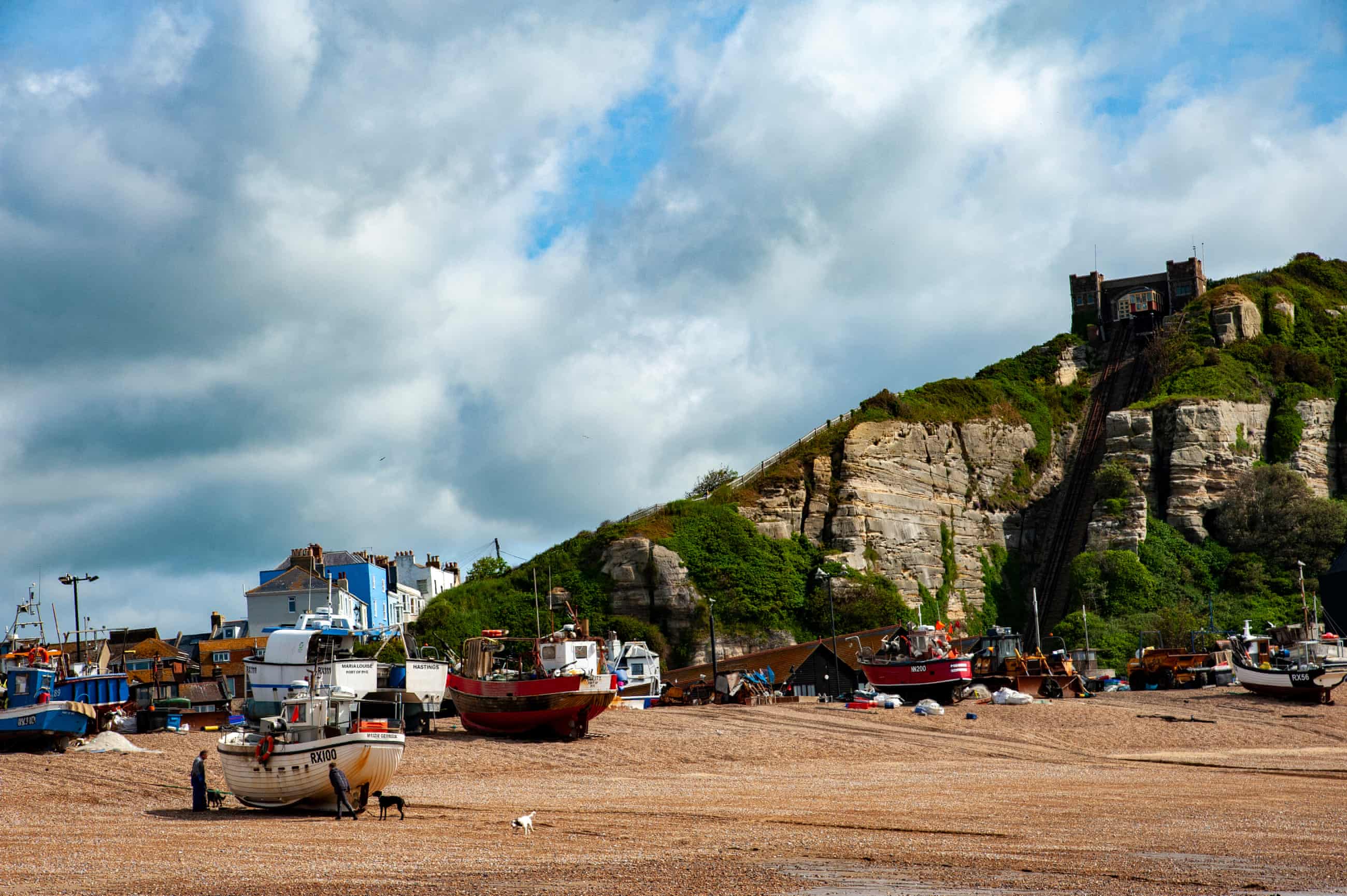
The iconic Stade in Hastings—home to the UK's oldest beach-launched fleet—is collapsing. Since 2015, the number of active boats has fallen by a devastating 66%, with most now lying idle.

Local fishers say the "Brexit reset" deal, which granted large EU vessels long-term access right up to their six-mile limit, has made a tough job impossible. They simply can't compete with the larger trawlers, and this is compounded by rocketing costs and climate pressures.

The fear in the community is palpable: "We don't want to become a toy town, where people leave the boats and it looks like a museum." This isn't just an economic crisis; it's the potential death of a thousand-year-old heritage.

Read the full story on the crisis facing our coastal communities: https://www.theguardian.com/environment/2025/oct/09/hastings-brexit-sunk-historic-uk-fishing-fleet

#FishingCrisis #CoastalHeritage #BrexitReality #Hastings

Wednesday, 8 October 2025

Steer Your Career: Your Path to a Deck Officer – Fishing Class 3 (Mate's Ticket) in 2025! 🎣

Ready to take the helm and climb the ladder in the fishing industry? The Deck Officer – Fishing Class 3 Certificate of Competency (CoC), often known as your Mate's Ticket, is the essential next step for ambitious, experienced fishermen.

This qualification from is specifically designed to equip you for leadership roles, allowing you to serve as a Mate on fishing vessels between 24 and 30 meters in length. Beyond that, it's an excellent course for becoming a highly effective and qualified watchkeeper on all large fishing boats and is more than half way to gaining your Class 1 or II skipper's ticket.

What You Need to Get Started

Before you enrol, make sure you meet the following essential requirements:

Sea time and Age

  • Sea time: You'll need 18 months worth of days at sea on a fishing boat. This course is for those with solid practical experience.
  • Age: You must be at least 19 years old.

Medical and Professional Requirements

  • You must hold a valid ENG 1 Medical Certificate.
  • You must be an experienced fisherman.
  • The Best Part: There are no written exams with this qualification. The course directly prepares you for your final MCA Orals exam.

Course Structure and Dates

The C3 Course

Course Name Dates Duration
C3 Deck Officer 27th October 2025 – 28th November 2025 5 weeks

Additional Required Short Course

In addition to the main C3 course, you will also need to complete your:

  • Radio Course (Restricted Operators Certificate): This course

Monday, 6 October 2025

Stunning weather greats Newlyn this morning for the Monday market!


Looking at the tranquility of the harbour you would never have known storm Amy whipped through over the weekend...

underneath all that ice is the finest seine caught hake...


courtesy of the Accionna...


just some of the hundreds of boxes of MSC Certified ornosh hake landed by the fleet including the Ajax...


Silver Dawn...


Stelissa...


Kellie Marie


the odd JD...

topped off with hake from the Britannia V...


it's a family affair, father and son in action...


top quality tubs...


and more bonito...

late summer scad...


the odd bass...


the work to get the fish away begins...


one big conger...


squid and mackerel...


and some cracking red mullet...


looks like young Shane had a good day with the jigging machine...


black bream make great sashimi apparently...


it's a tight squeeze to get the crabers landed into the waiting vivier truck...


Scotty's latest command...


basking in the morning sun...


is dwarfed by the big crabber...


looks like a fine start to the week...


things will improve once that scaffolding comes down...


one hazy Mount...


heading to the market for bait...


Jeremy gets a hand...


some prefer two wheels to four.


Sunday, 5 October 2025

Dive In: Your Opportunity to Become an IFCA Member and Shape Our Seas


Are you passionate about the future of our inshore waters? Do you have the local knowledge and balanced perspective it takes to drive sustainable marine management?

The Marine Management Organisation (MMO) is currently inviting applications for dedicated and influential Inshore Fisheries and Conservation Authority (IFCA) Members.

This is a unique and meaningful voluntary role that puts you directly in the driver's seat of local fisheries and conservation management.

The Role of an IFCA Member

As a member of the Authority, you won't be representing a single group, but rather using your expertise to work collectively and impartially. Your legal responsibility is to consider the **full range** of fishing and marine conservation interests within your district.

Your contributions will be vital:

  • Contribute Expertise: Bring your local knowledge and experience to discussions and decisions that directly affect the inshore marine environment.
  • Ensure Sustainability: Help guarantee that the use of fisheries resources is sustainable and balanced with the essential need to protect or restore marine habitats.
  • Balance Interests:nConsider the needs of everyone who depends on inshore fisheries and marine resources—from commercial to recreational users.
  • Support Conservation: Work to achieve conservation objectives, particularly within Marine Protected Areas (MPAs).

We are looking for individuals who can listen carefully, weigh different priorities, and take a balanced, impartial approach to complex decision-making. Strong local insight for the specific IFCA district you are applying to is essential.

How to Apply

The MMO operates a rolling recruitment campaign, meaning there is no fixed deadline to apply! You can submit your application throughout the year.

Your application will be assessed through a fair and open competition to ensure IFCA committees reflect a balance of perspectives across commercial, recreational, and environmental interests. Appointments are always made on merit.

Applications are welcomed from: New candidates with relevant experience and local insight.

Applications are reviewed quarterly, with interviews for shortlisted candidates following soon after.

This is a powerful opportunity to shape the development of inshore fisheries and conservation in your region. If you have the dedication and local insight, this is your chance to make a lasting impact on our seas.

Marine Management Organisation
Published 1 October 2025

Saturday, 4 October 2025

Fisheries Data Mapping: An Update from the MMO Marine Planning Team

Fisheries Data Mapping: Maps for Over-12m Vessels Now Available


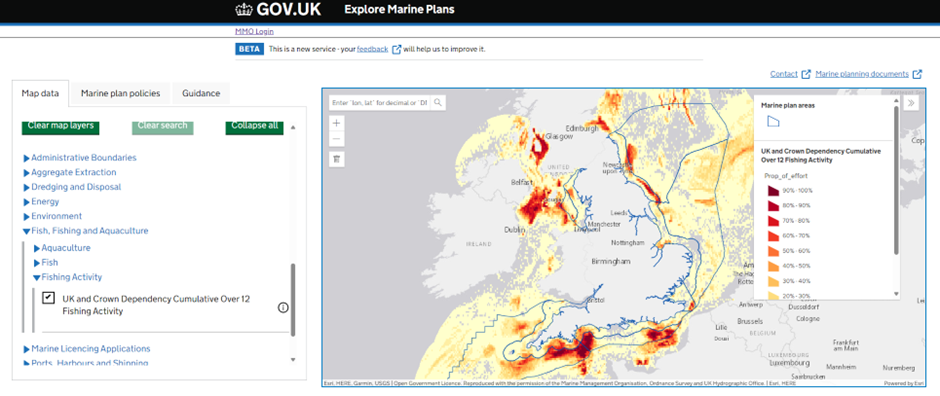
The Marine Management Organisation's (MMO) Marine Planning Team is pleased to share a significant step in its Fisheries Data Mapping project. Following an update in May, the team has now published maps showing the distribution of UK and Crown Dependency over-12m fisheries on the Explore Marine Plans platform. The MMO aims to publish information on other fisheries in due course.

This initial release has already proven useful, for example, by providing information about the location of fisheries for the modelling, planning, and leasing for offshore wind by the Crown Estate.


Important Context and Caveats for the Data

The MMO emphasises that there are several key caveats associated with this mapped data:

  • Data Timeliness: The mapped outputs were created with data up to 2021 for UK data and 2020 for non-UK data. Further data for 2022 and 2023 is currently being processed for future analysis.
  • National Scale Analysis: The analysis was conducted at a national scale for English, Welsh, and Northern Irish waters. The MMO notes that regional areas of importance with lower fishing activity, which might represent high local social and community value, could be excluded from this national analysis.
  • Historical Data: The data shows current and historic fishing effort and makes no predictions about future fishing activity or displacement.

Collaboration and Continued Development

Acknowledging the complexity and diversity of the fisheries sector and its associated data, the MMO believes it is critical to explain and share the outputs of its analyses with the fishing industry. This collaboration helps to ground-truth and triangulate the findings, as was done in 2023.

The team is continuing to review and develop the approach to improve and update the outputs from the initial analysis, incorporating feedback received during the 2023 engagement. They hope to provide more updates and discuss further with fishing interests in the near future.

The MMO encourages everyone, particularly industry stakeholders, to review the information presented and provide comments at the next engagement point, which will be promoted through their usual channels. Alternatively, stakeholders can contact the team through the marine planning mailbox, planning@marinemanagement.org.uk, or by using the “data feedback” link on Explore Marine Plans.


Addressing Data Gaps

Alongside the mapping of over-12m vessels, the MMO continues to gather other information and undertake relevant research. This includes publishing the report on the spatial distribution of under-12m fishing activity and its sensitivity to offshore wind in the East marine plan areas. This work begins to address some shortcomings with other mapped outputs by looking at under-12m fisheries in more detail. These outputs will also be published on Explore Marine Plans in due course.

Finally, the MMO looks forward to continuing to work with partners, including different members of the Defra group with specific responsibilities and expertise in fisheries, such as Cefas, JNCC, Natural England, and Seafish. Together, the goal is to provide the best information and insight to inform not only fisheries management but also wider initiatives such as marine spatial planning.