'>

Tuesday, 27 May 2025

Blooming octopus!


Much discussion on the deck...


as the Enterprise leaves the fish market...


after the crew finish landing a trip that included 400 boxes of Mediterranean octopus...


which may well mean young Georgie once again...


 holds the port record with the Enterprise...


It's a proper drizzly start to the day, gardens must be loving this weather, along with all the gastropods coming out of hiding...


after a bank holiday weekend and the arrival of a big spring tide the market was flooded with fish this morning with plenty of turbot...


and hake from the Ajax...


Stelissa...

S

and Silver Dawn...


the netters also provide fans of tub gurnard with cracking supplies at the end of every neap tide...


along with big John Dory...


he's been at the congers again...


this fella has to be quite some age to have that kind of barnacle build up on his shelll...


it's flatfish time of year for megrim...


turbot...


and decent plaice...


plus a few sand soles from the big boat...


that landed but a single cuttlefish...


amongst the 400 boxes of these guys...


young Graham uses the tried and tested, "dunk 'n' dip" method to wash his boxes after a morning on the mackerel...


as Cod makes his way to the market...


getting boxes back aboard is done by dropping them in the water and fishing them out...


after landing a nice touch of mackerel from a 4am start...


slip time for the Silver Dawn...


with visiting Scottish prawn boats, a spring tide and plenty of passing yachts the harbour is at full capacity - with the Ocean Vision and Vision V on their way...


cuttlefish traps on the South slip.


Saturday, 24 May 2025

Waters surrounding UK gripped by prolonged marine heatwave

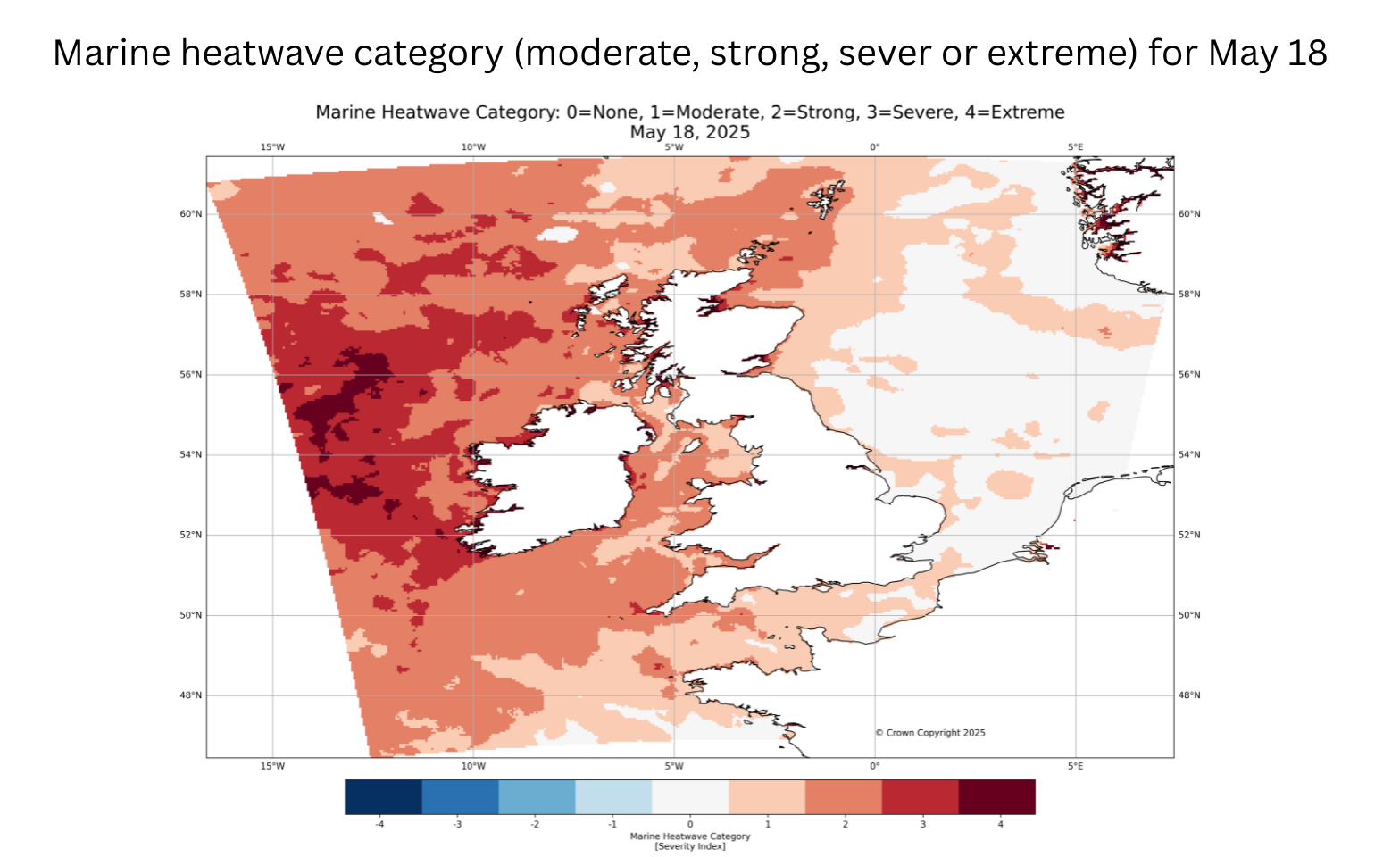
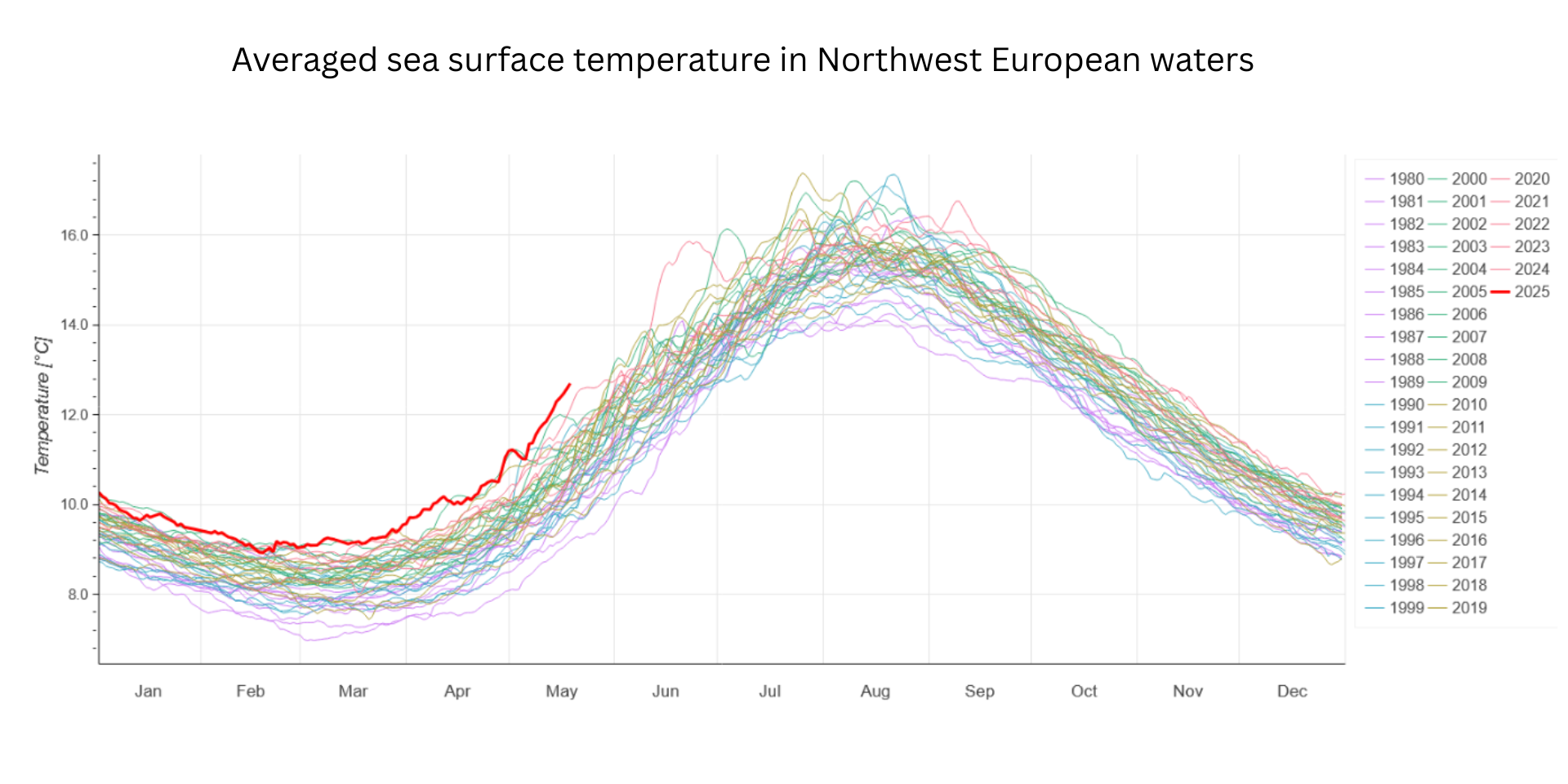
Northwest European waters are currently experiencing an extreme marine heatwave, with sea surface temperatures (SSTs) reaching record highs for April and May since satellite monitoring began in 1982.

This event, now lasting over two months, is significant due to its intensity and persistence. Current sea surface temperatures are warmer by up to 4°C west of Ireland, and by 1.5-2.5°C around the UK coastline: temperatures are what we would usually expect around mid-June. 

The heatwave is the result of several overlapping factors. Prolonged high-pressure systems brought a dry, sunny spring and weak winds and waves, creating ideal conditions for warming. This means the sea started to warm mid-February, one month earlier than usual. Additionally, the waters around the UK were already warmer than usual coming out of winter, a trend that has been building over the past 40 years, with an average increase of 0.3°C per decade. 

READ MORE: Why has spring been so warm and dry so far this year?

A key feature of marine heatwaves is the formation of a warm layer at the ocean’s surface. This layer acts like a lid, trapping heat near the surface and preventing it from mixing into deeper, cooler waters. It can be compared to a layer of olive oil floating on water, this thin surface layer allows heat from solar radiation to accumulate near the surface. When this layer forms, surface temperatures can increase fast: the last 9 days have seen a sudden additional 1°C warming.  

Marine heatwaves in UK waters usually last around two to four weeks. This year’s event began early March and has continued into May, making it one of the longest on record for this time of year. The North Sea has already peaked in temperature, while areas west of Ireland and the Celtic Sea are currently experiencing their highest levels. 

This prolonged warming can amplify land heatwaves by reducing the cooling effect of sea breezes and by altering rainfall patterns. Dr Jonathan Tinker, marine climate scientist, said: "With projections suggesting UK summer sea temperatures could rise by up to 2.5°C by 2050, such events are likely to become more frequent, intense and longer-lasting. Marine heatwaves offer a glimpse into how changing ocean conditions could shape future weather conditions."

Average Sea temperatures

READ MORE: Met Office Weather Deep Dive: A change is on the way

Cooler weather and stronger winds expected over the weekend are likely to ease the marine heatwave. With temperatures dropping and westerly winds picking up, the stable “olive oil” surface layer may begin to break down, allowing cooler water to mix in and gradually reduce sea surface temperatures. 

Centre for Environment, Fisheries and Aquaculture Science (CEFAS), Plymouth Marine Laboratory (PML) and The National Oceanography Centre (NOC) are keeping a close eye on what this means for our ecosystems and fisheries. Met Office is bringing together the UK and Irish research community with Defra at Reading University on 22nd May to discuss science and research ongoing in UK marine heatwaves. 

Keep up to date from the Met Office with weather warnings, the latest forecast on their website, on YouTube, or follow them on X and Facebook, as well as on their mobile app.

The EU Reset Deal – Cornish Fish Producers’ Organisation reaction


The Labour Government’s manifesto does not mention the fishing industry, and since its time in power, it’s hard not to believe it was left out for good reason. In the short space of 10 months, we have seen nothing but taking away any hint of opportunity from the UK fishing industry and its surrounding coastal communities, and it’s now a wonder what else can Keir Starmer do to make more of a mess of our industry.

The UK-EU reset deal struck on the 19th May is as far away from the CFPO’s priorities as could be imagined. At least thirteen more years of guaranteed access for the EU fleet, all the way up to the six mile limit, no change in quota shares, and absolutely nothing in return that will mean anything for a fisherman on the deck of a boat.

How could this go so wrong when the UK held the most powerful card in the pack. Automatic access for EU fleets to fish in UK waters was scheduled to expire in June 2026. That card was surrendered on 19th May 2025, as the UK sought trade and other benefits from the post-Brexit deal. The lack of direct engagement from those at the very top who were responsible for making this deal is evident in the outcome. The CFPO priorities were clear and simple and not at all unreasonable, and not one has been met, or even come close.

For all of the hard work that Cornish fishermen have put in to shaping up the new post Brexit world under the UK Fisheries Act, attending countless meetings to ‘co-design’ new fisheries management plans, it all feels rather pointless given the outcome of this new trade deal.
The lack of future opportunity the deal holds for our fishing businesses, our coastal communities, our next generation of fishermen, let alone our ability to manage our own seas will beg the question of any fisherman, why bother getting involved in fishing policy and politics ever again. Especially knowing that the EU will be marking our homework every step of the way. How far we are from being a true independent coastal state?

But allocating blame brings limited benefit. Realistically, there was always going to be a multi-year access deal for EU fleets. The geopolitics of the moment just do not allow for a bad-tempered breach between the UK and the EU at this juncture. It is the government’s complete failure to secure any quid pro quo in fishing terms that is breathtaking.

An exclusive 12mile limit would have marginal impacts on French, Belgian and Dutch fishing businesses but would have meant a great deal for the fishers struggling to make a living off the Southwest coasts.

A transfer of quota of stocks where there is an acute shortage (rather than paper fish) would have made a significant difference and would have signalled that this is a government that actually cares about fishing and was committed to securing its future.

When placed alongside the challenges ahead over fleet displacement by offshore renewable, this deal gives grounds to wonder.

But the world changes. Ukraine and Trump are proof of that. Any threat to an island nation’s food security would force a rapid change of priorities. That too is a thought worth considering.

In the meantime, the fishing industry will wonder how much of the £360 million allocated to the Fishing and Coastal Growth Fund is ‘new money,’ how it will be spent, over what time period, how much will be siphoned off, and how much will go to support genuine fishing businesses and communities.

As so much in these negotiations and this reset deal, so much remains opaque.

Attenborough's Ocean - what it didn't say.


Friday, 23 May 2025

Fine #FishyFriday in May

Make the most of the weather today, change is on the way...


in addition to all the inshore fleet, fish from 11 boats filled the market this morning for the final market of the week...


with plenty of hake from west of Scilly...


and head-on mink from the prawn boats...


theres no ;et up on the octopus 'bloom' as it is called by scientists...


some cracking red mullet from the seiner...


with so many boxes leaving hardly any room to move...


its turbot time for the netters that fish with tangle gear...


and Dover time for some of the beamers not chasing 8-leggers...


there's two sides to every turbot tale...


a nice clean box of grey gurnard...


yet more of the beast from the Med...


and more...


the fish in Bay 3...


was wall-to-wall with boxes...


and yet another two box cod trip...


there's blue gold luking in there somewhere...


the point of no return for many small shellfish that succumb to the huge tentacles of these guys as they move towards the UK...


the inshore boys are enjoying the mackerel challenge...


prawners, crabbers and netters between trips...


young Sam swinging the spiders ashore...


Vision V...


Lily Anna just two of the big prawn boats working from Newlyn on this year's langoustine season...


though the grounds can prove a challenge with the wreckage still strewn all over the seabed in the Western Approaches

leading to some serious damage of trawls, this net with a missing belly and much more...


but its all smiles from the crew even though they have two days ahead of them on the quay...


putting the trawl...


 back together...


which currently fills the entire end of the quay...


in addition to the prawn boats...


a Scottish scalloper is also working from the port...

that's one way to counteract the big tide and keep the boats afloat in the harbour...


the guys who work boats of this size had nothing to shout about after the EU deal that was announced earlier this week, nothing to protect fishing inside 12 miles as they had hoped...


as restoration work work continues to bring the old quay back into use; fishing from the medieval Old Harbour was first recorded 670 years ago in 1355...


after the deal with the EU that was signed over this week one wonders if the harbour will still be a place recording fish landings in 670 years time?