'>

Thursday, 17 April 2025

Newlyn Fish Market: A Thriving Hub for Fishermen and Buyers in 2024, 2025 and Beyond


Newlyn Fish Market is experiencing significant success. With record-breaking landings—nearly 3.9 million kg of fish in 2024, up 22% since 2022—and a market value soaring to £19.1 million, Newlyn is a powerhouse of opportunity. This momentum continues into 2025, fuelled by fresh investment, innovation, and a commitment to excellence. Whether you’re a fisherman looking for the best landing conditions or a buyer seeking exceptional, traceable seafood, Newlyn is the place to be.

At the heart of Cornwall’s fishing industry, Newlyn Fish Market, operated by W Stevenson & Sons (WS&S), is entering an exciting new era. With a reputation for high-quality landings and an efficient auction system, Newlyn is not just maintaining its position as the England's premier fishing port—it’s raising the bar for the future.

2024: A Year of Remarkable Growth

The numbers speak for themselves. In 2024, Newlyn Fish Market operated by WS&S saw strong increases in landings, measured both in terms of volume and value:

Newlyn Fish Market Growth 2024

Metric2024 ValueChange from 2022
Volume3,853,708 kgs+22%
Value£19.1 million+32%


This growth reflects the confidence of fishermen choosing Newlyn and WS&S as their preferred landing port and market, as well as the increasing demand from buyers drawn to the market’s exceptional quality and efficient auction system.

Paul Trebilcock, Stevenson's manager, commented on the market's performance: "In terms of taking on fish market  building and services from harbour I think it is going well - not without its challenges but trend in number of boats, buyers and prices are all going right direction and hopefully the level of service & investment we can offer will follow same trend. It has been nearly a year now since the formal agreement was signed with NPHC in a genuine spirit of positivity and ‘can do’ from both parties. From a Stevenson’s perspective we were clear, there was a responsibility on us to ensure the efficient, transparent and independent operation of the auction and that we had to build on Newlyn’s reputation as the number one market for quality fish in order to attract more vessels, fish and buyers – think we have done that. Hopefully this first year marks the start of a new era in the relationship between NPHC and WSS that will ensure that Newlyn remains a fantastic fishing port offering good services and facilities, with an excellent online auction market and auction services that will continue to attract the very best fish and fish buyers."

Regarding the impact of the Plymouth Trawler Agents closure, Trebilcock added, 

"Fair to say we have picked up some additional landings particularly from Mevagissey and that has helped to improve amount and range of fish on the market. Again we need to try to demonstrate and improve on service we can offer to those displaced by PTA closure and any other vessels that want try Newlyn, ultimately for fishermen price on day for fish landed is main factor and I think we deliver on that."

A Diverse Range of High-Quality Species

UK waters are rich with a variety of species, uniquely so in the South West, making Newlyn's market the best choice and destination for buyers seeking the very best of British fish landings.

Key species from the incredibly diverse range of vessels and catching methods landed on a daily basis, include:

  • Prime demersal species including Monkfish, Megrim, Dover Sole, and Lemon Sole

  • Cuttlefish and Squid

  • MSC-Certified Sardines, Hake and Other White Fish

  • Handline-Caught species including Mackerel, Bass, and Bluefin Tuna - with landings steadily increasing in recent years

This diversity (over 30 species regularly landed) ensures a reliable, high-quality supply for domestic and international markets.

Investing in People, Services, and Innovation

At the core of our success is our investment in people. WS&S is dedicated to supporting the fishing community, providing expert advice, and enhancing services tailored to your needs. Whether you're a fisherman looking for the best landing conditions or a buyer seeking seamless auction access, we’re here to help.

Why Choose Newlyn?


  • Proven Growth: Consistent increases in both volume and value of landings

  • Trusted Auctioneer: Transparent, efficient online auction with WS&S

  • Sustainable Practices and Provenance: Commitment to responsible fishing, including MSC-certified species. In addition as we know each vessel landing to us you can be sure of traceability and provenance

  • Personal Support: A dedicated team offering advice and exploring new opportunities with you


Get in Touch Today

Market Manager: Ian Oliver MD,  ian.oliver@wstevenson.co.uk Office: 01736 362998 | Mobile: 07876 832055

Catching & Sustainability Director: Paul Trebilcock Email:  Email: paul.trebilcock@wstevenson.co.uk  Office: 01736 362998 | Mobile: 07836 522314

Wednesday, 16 April 2025

The "Great British Fish Gap"


Eight in 10 shoppers say retailers should make it easier to identify British goods in stores. A poll of 2,000 adults found 59 per cent would prefer to buy produce that is grown, made, or harvested in Britain. Eggs, milk, potatoes, and fish are the items those polled are most inclined to seek out.

Competitive pricing (57 per cent), supporting British businesses (51 per cent), and food safety standards (47 per cent) are the top factors that would influence shoppers to buy from local suppliers.

There is a feeling among the public that both the government (76 per cent) and supermarkets (77 per cent) need to do more to support British fishermen and food producers as well. The need to know where produce comes from is certainly something that shoppers look at, with 48 per cent stating they check labels on food they pick up.

The research, commissioned by Discover Seafood, an initiative run by The Fishmongers’ Company, is urging UK supermarkets to stock more British species in order to meet consumer demand for local produce and support fishermen from these shores.

Gavin O’Donnell from the project said: “There is lots of great local produce available to consumers, but knowing where to find it can be a struggle.

“It’s clear demand is there for food grown, caught and harvested in the UK so where is the support from retailers?

“There needs to be a better balance between being competitive on price and opening up opportunities for both the consumer and the producer.

“In terms of seafood, many lesser known British species are highly nutritious and affordable - so why is there not more of it on the shelf?”

When it comes to seafood, 68 per cent would buy more produce that was clearly labelled as British in a supermarket according to the OnePoll data.

He added: “Many local species are caught and never make it to supermarket shelves.

“The sad reality is that most of the fish that’s found in UK supermarkets is imported.

“Retailers are reluctant to price match popular species like Cod and Haddock in support of British fishermen against fish from abroad.”

This results in low awareness of what local fish is on offer in UK waters, with consumers seemingly unfamiliar with species such as hake (21 per cent) megrim sole (six per cent) and gurnard (10 per cent).

And with 30 per cent of those who buy or eat seafood saying access to a wider variety of local species would make them eat more British, there’s plenty of room for growth in the home market.

Gavin O’Donnell from Discover Seafood added: “This research reveals a huge missed opportunity for consumers and retailers.

“Consumers have a low awareness of the range of British seafood, many say a wider choice would encourage them to eat more and this could be a sales driver for supermarkets.

“There is an opportunity for everyone to explore what the UK seafood industry can offer.

“It benefits local producers, and supermarkets can help drive awareness of what’s local to the UK by expanding their offering.

“This would allow consumers to enjoy more high-quality local food.”

Imagining the Fishing: Artists and Fishermen in Late Nineteenth Century Cornwall


An interesting paper by Beranrd Deacon titled, Imagining the Fishing: Artists and Fishermen in Late Nineteenth Century Cornwall

Read the full paper here:

Department of Lifelong Learning, University of Exeter, Exeter, UK.

Abstract:

The focus of postmodernist historians on language and representation clashes with the more traditional approach of the social historian to material structures and processes. This article adopts the suggestion of Wahrman that a 'space of possibilities' exists where these apparently competing perspectives might be connected. The concept of a 'space of possibilities' is pursued through a case study of a marginal group, the fishing communities of west Cornwall in the late nineteenth century. The article explores points of contact and contrast between the artistic and the fishing communities, between the painterly gaze and the subjects of that gaze. It is proposed that, while the artistic colonies and their representations might be explained as a result of discourses reproduced in the centre, their specific choice of location in Cornwall can also be related to the local economic and social history that granted them a space of possibilities. 

The Art of Fishing in Cornwall – A Historical and Contemporary Perspective

Cornwall, with its stunning coastline and rich maritime history, has always been a significant hub for the fishing industry. The relationship between artists and fishermen in this region, particularly during the late 19th century, offers a fascinating lens through which we can explore the narrative of fishing—not just as an industry but as a way of life steeped in culture and community.

Capturing Life by the Sea

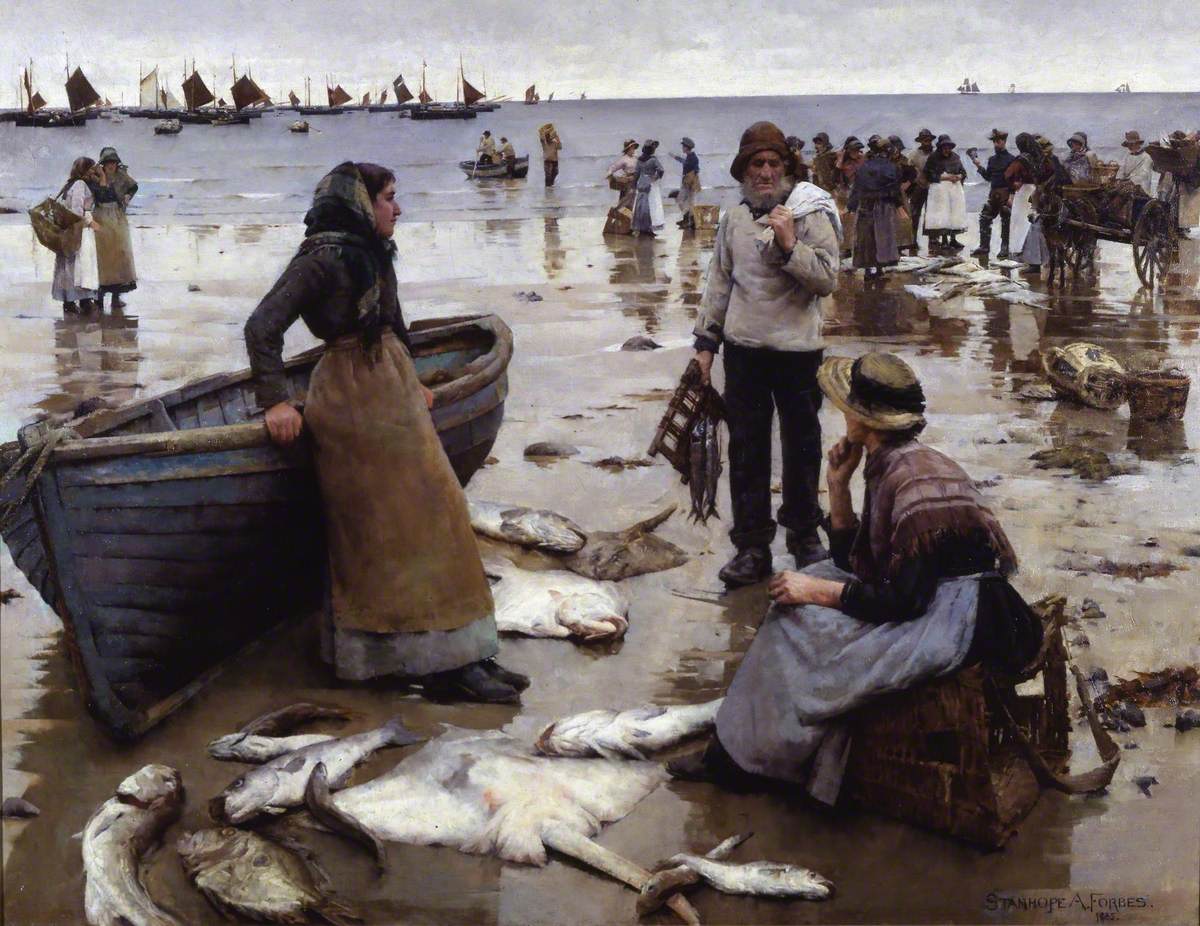
Historically, artists such as Stanhope Forbes and Henry Scott Tuke set up their easels along the Cornish shores, capturing the daily lives of fishermen through their romanticised depictions. Their works vividly illustrate the rigours of fishing, lounging fishermen, and the idyllic scenery of quaint fishing villages. However, these artistic portrayals often glossed over the hardships faced by these communities, presenting a timeless picture that sometimes overlooked the socio-economic realities of the time.

Among the more contemporary artists, Alfred Wallis stands out for his unique, naïve approach that transformed his personal experiences as a fisherman into captivating works of art. His paintings evoke not just the visual beauty of the sea but also resonate with the fisherman's spirit and the local community's struggles. Similarly, artists like Colin Scott and Bernard Evans have continued this tradition, drawing from the landscape and the lives of those who inhabit it to tell stories about the fishing communities.

As we navigate through the past, it’s essential to connect these artistic reflections with the lived experiences of the fishermen. Cornwall's fishing communities, particularly in Newlyn and St. Ives, grappled with the rise of industrial fishing practices and economic changes, leading to a decline in traditional methods that had defined their lives. The introduction of railway connections in 1859 opened up new markets, transforming fishing from a local necessity to a more commercial enterprise.

Bridging the Past and Present

Fast forward to today, the fishing industry in Cornwall faces different challenges, such as overfishing and environmental sustainability. The narrative has shifted significantly, moving from a simple portrayal of rustic life to a more nuanced examination of contemporary issues affecting fishermen. Modern artists are now engaging with themes that reflect both the beauty of Cornwall’s landscapes and the pressing realities these communities face in an age of climate change and industrialisation.

Artists like Ken Howard, Tim Hall, and Morgan Penn are redefining the fishing narrative through their works, often addressing the ecological ramifications of fishing practices and advocating for sustainability within the industry. Howard’s impressionistic style brings to life the fleeting moments of fishermen at work, while Hall and Penn incorporate modern perspectives that highlight the evolving challenges faced by coastal communities. This new wave of artistic expression serves as a bridge from the past, illuminating the evolution of fishing from quaint tradition to a critical focus on environmental responsibility.

Continuing the Conversation

The dialogue between artists and the fishing industry in Cornwall continues to thrive, representing an intersection of history and ongoing shifts in cultural, ecological, and societal contexts. Through their art, modern artists not only honour the traditional fishermen but also amplify current voices and concerns, ensuring that the narrative remains relevant and reflective of today’s world.

As we explore art through the gaps of history and modernity, we uncover layers of meaning that connect us to both the past and the present, fostering a deeper appreciation for the exquisite yet complex tapestry of the Cornish fishing life.


Tuesday, 15 April 2025

UK seafood makes a splash in Vietnam in major export boost


Vietnam grants market access for British live seafood products, opening new opportunities for growth and trade.

The UK seafood industry celebrates a breakthrough today (1 April) as Vietnam grants market access for British live seafood products, opening new opportunities for growth and trade.

The agreement unlocks significant opportunity for exports of live seafood from the UK to Vietnam, who are amongst the highest consumers of seafood per capita and the highest in South East Asia.

British seafood is known globally for its taste, quality, and rich heritage, and Vietnamese consumers will now have access to premium seafood products in their preferred live form sourced from the UK’s vibrant and vast coastline, including popular varieties such as lobster and brown crab.

These additions will enrich culinary options for Vietnamese consumers, who eat approximately 37kg of seafood per person each year, allowing them to experience the distinctive flavours and exceptional quality that have made British seafood renowned worldwide.

British seafood exports to Vietnam have already shown strong growth, with fresh, frozen, and processed products seeing a 40% increase in the first 9 months of 2024 compared to 2023.

In line with the Government’s priority of delivering economic growth and putting more money into working people’s pockets under the Plan for Change, this breakthrough creates new export opportunities that coastal communities across the length and breadth of the UK have pushed for in recent years. Unlocking the Vietnamese live seafood market will boost local economies and support jobs across Britain’s shorelines, contributing to nationwide economic growth.

Minister for Food and Rural Affairs Daniel Zeichner said:

This is a tremendous win for our seafood industry. By securing access to Vietnam’s thriving live seafood market, we’re opening new opportunities for British businesses while supporting jobs across the UK as part of our Plan for Change.

Our high-quality seafood is increasingly sought after worldwide, and this agreement demonstrates our commitment to get British exports moving by helping producers reach valuable international markets.

Minister for Exports Gareth Thomas said:

This is a welcome and significant breakthrough, opening up a new and lucrative market to live seafood exporters across the UK.

 We know that when businesses export the whole economy benefits. That is why this government will continue to support businesses by removing trade barriers to enable them to take advantage of export opportunities abroad to grow the economy at home.

Access to the Vietnamese market is estimated to generate around £20 million for the UK seafood industry over the next five years, according to the Shellfish Association of Great Britain (SAGB).

David Jarrad, CEO of Shellfish Association of Great Britain said:

We have been delighted to engage with government officials in the UK and Vietnam and help achieve this export agreement.

The opening of another market for our sector is great news for the industry and demonstrates the strong worldwide demand for the UK's quality live shellfish.

Vietnamese importers are willing to pay competitive prices for British seafood varieties that have less demand in UK and European markets, providing an important alternative revenue stream for dozens of seafood traders.

Through dialogue and collaboration with Vietnamese officials, Defra and the Department for Business and Trade (DBT) resolved concerns, cleared regulatory barriers, and showcased the high standards of British seafood production to create new opportunities for UK exporters.

These officials will work closely with the UK seafood sector and industry bodies to ensure a smooth transition into the Vietnamese market.

Thursday, 10 April 2025

Five Belgian registered beam trawlers detained.


There was much interest in Mounts Bay on Wednesday this week when five Belgian beam trawlers were escorted into Mounts Bay off Newlyn - with ribs to-ing and fro-ing between the fisheries patrol vessels...


Trafalgar Sentinel and...

the Welsh FPV, Rhodri Morgan...

however, the detentions were short-lived and the boats including the Op Hoop Van Zegen...

and Z39 Sophie were soon on their way back to the fishing ground south east of the Smalls. As yet, the reason for the detentions is unknown.