'>

Thursday, 16 June 2022

Fishing Fuel Costs at Tipping Point


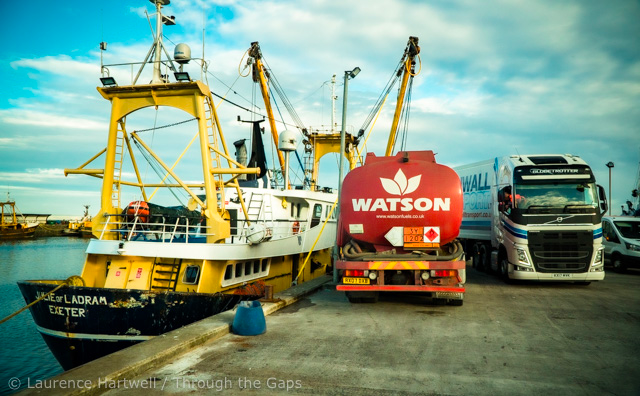
Typical re-fuelling scene in Newlyn - boats of this size uses over 3,000 litres a day when fishing.


Many fishing vessels are facing a cruel choice between tying-up or going to sea to make a loss.

NFFO members are providing landings information that illustrate although reasonably healthy grossings are being made, after deductions for fuel earnings for crews are risible.

  • In one example a vessel in the south-west made a landing worth £11,0489 but fuel costs swallowed £10,416.
  • In another case, a landing of £44,176 and a fuel bill of £29,068 left £1516 to be shared amongst 8 crew.
  • A third example was an inshore vessel after eight days fishing made £8706 but faced a fuel bill of £5234, leaving £927 for the crew.

These examples illustrate that the current situation is unsustainable are at the point beyond which vessels will have to tie up.

The NFFO has made the case to ministers for a support package. Fuel costs are already supported in France and Spain through emergency measures.

The Government’s response so far has been that every economic sector is hurting because of high energy costs and there is no case singling out fishing for special treatment, despite the uneven playing-field with Europe. Whether the Government will sustain this hardnosed approach in the face of widespread tie-ups, with knock on effects for the whole supply chain, is for discussion.

Contingency Plan

Fishing is an area of primary production that is of enormous regional, economic and cultural significance but is beset by a wide range of challenges. The NFFO had to fight hard for a standalone support scheme when fishing was left out of terrestrial schemes during the covid lockdown. Markets have now largely recovered but high fuel costs are undermining the viability of the fleet. No doubt there will be a market correction at some point but by then the damage will be done. There is an urgent need for Treasury intervention now and in the longer term for a contingency plan to deal with these kinds of shocks. Simply put, unlike many other industries, fishing vessels are price-takers and cannot simply pass on higher costs to the consumer.

Repurpose Existing Funds

Many in the industry are of the view that at least some of the funds allocated to the fishing industry should be repurposed to deal with this crisis. The EU has unlocked funding support for member states under a crisis mechanism of the European Maritime and Aquaculture Fund (EMAMF) and are in the process of utilising unspent European Maritime and Fisheries Fund (active between 2014-2020) to deliver a second round of support. The UK contributed to the EMFF scheme when it was a member of the EU, so a second round of support would potentially make the UK eligible to claim funds. https://thefishsite.com/articles/eu-to-support-aquaculture-businesses-hit-by-russia-ukraine-war

The EFRA Parliamentary Committee is currently examining the effectiveness of the UK Fisheries and Seafood Fund and, depending on the Committee’s report there might be scope for repurposing some of the £100 million allocated to fishing for that purpose.

Spasm

We have witnessed these kinds economic of spasms before. But they can create lasting damage – first and foremost in recruiting crew – if the government adopts and maintains a laissez faire approach.

The NFFO will continue to make the case for financial support. We have learnt from experience that the Government always says no – until it says yes.

Full story courtesy of the NFFO website.

Wednesday, 15 June 2022

Make fishing your career - free training from SCT in Newlyn this summer.


Seafood Cornwall  Training are running the second of their fishing career days  next Tuesday


21st June at the Hub training centre in Newlyn...


Head on in through the wooden door to the left of the centre.

This taster day will tell you all you need to know about starting your fishing career and how you can sign up for the - free -

New Entrants 15 Day INTRODUCTION TO COMMERCIAL FISHING COURSE


The Seafish 15 Day Introduction to Commercial Fishing course is for new entrants to the fishing industry. The course consists of two weeks shore-based training (covering safety, gear and catch handling, net mending, rope work and navigation) and one week of mandatory safety courses (Sea Survival, Fire Fighting, First Aid, Health and Safety) and the Seafish Basic Fishing Vessel Stability course.

Immediately following this course students can look for berths on suitable fishing vessels so that they can go to sea and put their new-found knowledge into practice and gain practical experience of fishing.

This induction course will suit both youngsters looking for a career at sea in the fishing industry and older candidates who are looking for a career change and interested in commercial fishing as an occupation.

Cost: Free! 
Seafish funded (Subject to eligibility: applicants need to be at least 15 years old and have no previous fishing experience).

Next Course Dates: 4 to 22 July 2022

You can download an application form for the course here:


There will be Taster Events on 31 May and 21 June, that aim to give you an overview of the fishing industry and the topics that will be covered during the course while learning more about you. You will have to opportunity to meet some of our Instructors to learn more about the course and the fishing industry.

Course Aim and Objectives 

The aim of this three week course is to provide new entrants with the basic skills to begin working at sea in a safe and useful manner. More specifically the course objectives are:

To provide trainees entering the fishing industry with an understanding and the basic information required to stay safe on-board a commercial fishing vessel. To give the basic knowledge and skills, for the duties required, to begin working on board a commercial fishing vessel in a safe manner.

Course Content: 

This course is essentially a collection of short courses and comprises of the units listed below.

  • Introduction and Overview of the Course
  • On Board Procedures
  • Introduction to Ropes, Knots and Fishing Gear
  • Net mending and Gear construction
  • Watch Keeping and Navigation
  • Basic Engineering
  • Intermediate Knots and Splicing
  • Boat Handling
  • Basic Care of the Catch
  • Intro Food Hygiene in the Seafood Industry
  • Basic Sea Survival
  • Basic Health & Safety
  • Basic First Aid
  • Basic Fire Fighting
  • Basic Fishing Vessel Stability


If you wish to start a career at sea and go fishing in the meantime, you will need to complete the four mandatory basic safety courses as detailed on our fishermen’s training page.

More information on starting a career in the fishing industry can be found here via the Seafish website Fishing as a Career

To apply for your place on the course, call 01736 364324 or email info@seafoodcornwalltraining.co.uk

Monday, 13 June 2022

Mediterranean octopus on Monday morning's market in Newlyn


Big tides have brought most of the netting fleet back to port...


while the St Georges is having some attention paid to her nozzle...


Monday morning's market was full of net fish, plenty of hake from the Stelissa...


and turbot her and her...


sister-ship, Silver Dawn... 


and yet more spurdogs...


to with with other cartilaginous fish like these thornback ray...


and blue shark...


continuing the rich palette of piscine colours red mullet...


while monk tails...


and John Dory came courtesy of the beam trawlers to land over the weekend...


the boxes stacked up tell their own story...


big fat juicy octopus


of the Mediterranean variety came courtesy of a few inshore boats...


at the other end of the market there was just enough room to lay out this big trip of turbot from the Celtic Dawn...


also in the top eating category, these cracking tub gurnard...


Couch's bream


and brill kept buyer's bidding fingers twitching nervously over their keyboards during the reverse-clock auction this morning, too slow with your bid and no fish!..


last of the netters to land, the Ocean Pride...


some subtle shades grace the hull of the Three Jays...


these pots were rolling around the seabed for many months...


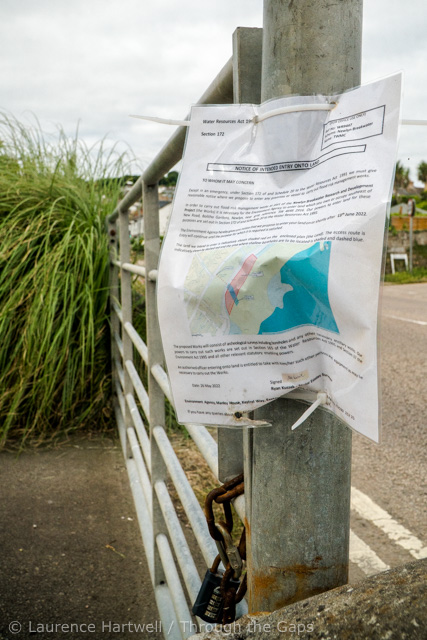
eagle-eyed locals will have spotted the notices of intent to drill and explore the foreshore off Newlyn Green...


and for the next few days members of the Maritime Archaeology Trust...


will have set out their stall and welcome members of the public to see what work will be carried out...


on the beach between the footpath and the tide-line.


In Their Own Words: Fishing Industry Voices Highlight Impacts of Brexit in New Report from the APPG on Fisheries


Brexit - Many fishermen thought they were promised an exclusive 12 mile limit.


Trade, access, quotas, markets, and management of fisheries resources all highlighted for political attention by the fishing industry post-Brexit.

Financial losses and long-term viability are significant concerns for many UK fishermen and other members of the industry.

The All-Party Parliamentary Group (APPG) on Fisheries has released a report showcasing voices from across the UK fishing industry speaking on the impact of Brexit on their livelihoods – and the actions these people believe government should take to support the UK’s fishing industry.

It was frequently predicted that the UK fishing industry would benefit from Brexit, both in the run-up to the 2016 referendum and the UK’s official departure from the EU. However, industry members have said that the reality has proved to be very different. Their words form the basis of the new report, “Brexit: Voices of the UK Fishing Industry”.

Alistair Carmichael MP, Vice Chair of the APPG, suggested that the APPG compile the report following a Parliamentary debate on the same topic in mid-2021. “Having raised the myriad challenges faced by fishermen and the wider seafood industry numerous times with the government in the past two years, the work of the APPG has been vital in gathering evidence across the sector,” he said. “This timely report provides a direct insight into the unique circumstances our fishing industry has faced as a result of new trading conditions, and will be a crucial resource for those in Parliament and government aiming to support the sector.”

In winter 2021, the APPG on Fisheries released a survey to collate experiences of Brexit felt by members of the fishing industry. Responses revealed significant and shared concerns around financial losses and the long-term viability of individual businesses, fishing fleets, and other parts of the industry including processors and transporters. For example, exporters have routinely struggled to get their shipments through the border, resulting in loss of income or, in extreme cases, entire markets, while small-scale fishers have felt unable to compete with larger EU vessels which have retained some access to UK waters until at least 2026.

"This report shines a light on what is needed from policy to help support the UK's fishermen, who have suffered many negative impacts to their livelihoods as a result of Brexit," said Tina Barnes, Head of Impact at The Seafarers' Charity, which co-funded the report. "Paying heed to the recommendations from industry members themselves would help ensure they get the assistance they need."

While respondents overwhelmingly felt Brexit had not worked in their favour, many were hopeful that the situation could be improved. Their recommendations included:

  • Ensuring quotas are distributed and managed more fairly.
  • Further restricting non-UK fishing fleet access to UK waters, sooner than 2026.
  • Ensuring effective and inclusive management of domestic stocks.
  • Working with the EU to free up trade, and remove regulatory and financial barriers
  • Implementing more restrictions on access to UK waters for non-UK fishing fleets
  • Investing in infrastructure and new markets, at home and abroad.

Dr Eleanor Adamson, Fisheries Programme Manager with The Fishmongers’ Company’s Fisheries Charitable Trust, which co-funded the report, said: "We are pleased to see the publication of this report, which will stand as a permanent record of the turbulent times that UK fishermen have faced in recent years, as well as providing pathways for supporting the sector where it needs support most."

Carmichael concluded: “Based on the correspondence I received personally and the accounts contained in this report, it is clear that more and better engagement is needed, and pragmatic, serious efforts to support the fishing industry are required from ministers in order to ensure that coastal communities can continue to thrive into the future.

The report is publicly available and will also be sent to the APPG’s Parliamentary Members, relevant Ministers, and other coastal MPs.

The full report can be found on the APPG website.
For any questions, get in touch with the APPG Secretariat at secretariat@fisheriesappg.org.

Saturday, 11 June 2022

Fish intel - black bream and bass..

Sussex Wildlife Trust is excited to be partnering with the University of Plymouth and Sussex Inshore Fisheries & Conservation Authority (IFCA) on a new project which uses novel technology to understand the movement of fish in our local area.

The Sussex-specific part of the project, which ourselves and Sussex IFCA are working on, is part of a wider project known as FISH INTEL, which is a cross-Channel partnership supported and funded by the European Regional Development Fund via the Interreg France (Channel) England programme, which focuses on a series of sites along the coastlines of southern England, northern France and Belgium.

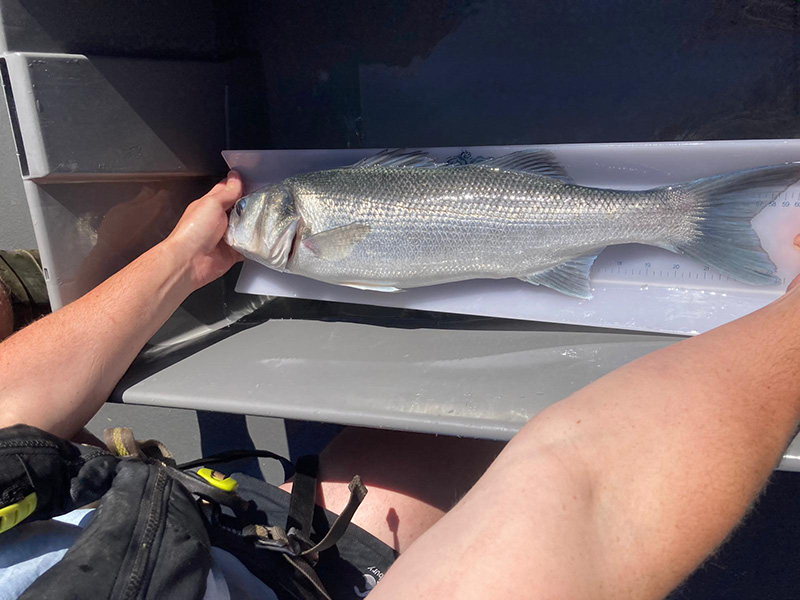
Measuring Bass length 


FISH INTEL is using fish tracking technology and underwater video surveys to help us understand more about fish movements and the habitats individual species prefer. Here in Sussex, we’ve been focussing on Black Bream (Spondyliosoma cantharus) and European Bass (Dicentrarchus labrax), specifically around the Sussex IFCA’s Nearshore Trawling Byelaw area. Sussex Wildlife Trust has been able to purchase additional fish tags and acoustic receivers, thanks to funding from The Pebble Trust.

The team has been out to sea deploying acoustic receivers and tagging fish. The tagged fish emit a ‘ping’ every few minutes, which can be picked up by the receivers if they are within a 200m range. This data will allow us to create simple presence / absence maps of where the fish are going; this can then be overlaid with other data, such as habitat type, so we can identify preferred habitats and infer fish behaviour.

Additionally, Natural England have further extended the project by deploying an additional set of acoustic receivers within the Kingmere Marine Conservation Zone, which is an area of particular benefit to Black Seabream during their breeding season (this is due to the specific habitat that male Bream use to build their nests).

The equipment was deployed this spring and data will be retrieved at intervals throughout the year. Watch this space for future updates on the project, we hope to have some interesting data to share, particularly as we start to see the Sussex kelp forests restore over time.

Releasing tagged fish

All fishes are tagged by individuals from the University of Plymouth holding a UK Government Home Office License; the tags are selected so as to cause minimal disturbance to the fish once in place.

Tagged black sea bream have a notch cut out of their tail so that they can be identified. If you catch a fish with a notched tail, please photograph, release and report location and data to the FISH INTEL team.

All acoustic receiver equipment has been deployed under the necessary Marine Management Organisation license.

If you find the acoustic receivers either coastally or at sea, please do not interfere with this equipment. If you think the equipment may be dislodged or damaged, please alert the FISH INTEL team.

To keep in touch with the project, visit:

Friday, 10 June 2022

Fine #FishyFriday in Newlyn with the fleet all at sea.


With fuel now costing in excess of 120p a litre the boats are maximising every hour they can at sea - an empty harbour on June!..

overnight the Ajax popped a nice trip of hake ashore...


known locally as a plus-four, the greater fork-beard...


unusual castellated conger...


spurdogs are still being caught, luckily not all the fleet have to dump them under the real time shark monitoring scheme...


as Tom looks out over the bay the Cornish air Ambulance pays a visit to Newlyn Green...


one of last year's black-back gull finding a comfortable place to rest - on top of a sardine net being got ready for the coming sardine season which should start next month...


a couple of visiting Brixham stern trawlers, Sophie Jane of Ladram


and the Stronsay Maid...


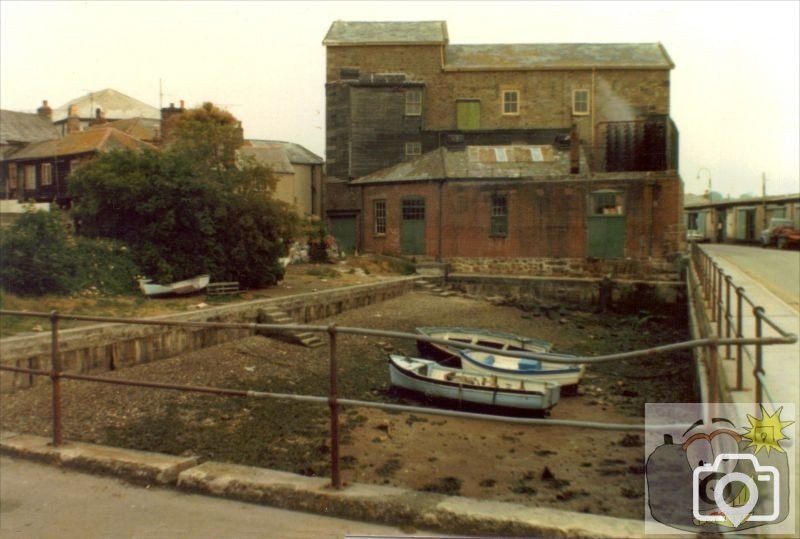
those lucky enough to live on the edge of the harbour would once have been able to dive in at high water from their back door...

Photo courtesy of Treeve on Picture Penzance taken in 1982.

straight into Keel Alley where plenty of Newlyn boys and girls learnt to swim - some the hard way, thrown in by so-called, 'mates'!


Thursday, 9 June 2022

Fisheries and Seafood Scheme: Panel Dates Announced


The Marine Management Organisation has confirmed the first panel dates for the re-launched Fisheries and Seafood Scheme and is inviting applications from the industry.

The Marine Management Organisation (MMO) is inviting applications for the Fisheries and Seafood Scheme (FaSS).

The grant scheme – administered by MMO on behalf of Defra – was relaunched in April to help support the long-term sustainability, resilience, and prosperity of the seafood sector across England. It will deliver £6m per year in funding until April 2025, providing long term investment to the sector.

The new-look scheme builds on the success of FaSS, which first opened last year and supported more than 550 projects across a range of seafood and marine businesses, charities and other organisations.

Improvements this year include simplified guidance, enhanced levels of funding for micro-entities and funding that is better targeted at the sector’s needs.

The scheme will continue to match fund projects that boost business resilience and increase sustainability across our world-class fishing industry, further strengthening support for food producers across the catching, processing, and aquaculture sectors.

Applications with a total project cost of more than £150,000 must be considered by the FaSS panel, which is responsible for reviewing and recommending projects in line with the overall objectives of the scheme.

Michelle Willis, Director of Finance and Resources at MMO said: “Building on the success of year one, the relaunched FaSS has is already attracting a lot of interest from the industry and we are delighted to announce the first panel dates for applications with a total project cost of more than £150,000.

“The scheme aims to support the long-term sustainability and success of the seafood sector throughout England, and we encourage potential applicants to act now and get in touch, our Grants Team are here to support you through the process.”

The panels for 2022 are expected to take place week commencing 22 August and week commencing 28 November. Applications to be considered at these sessions should be completed and submitted to MMO by 1 July and 7 October respectively.

You can contact the MMO Grants Team on 0208 026 5539 to discuss any potential panel application or visit the MMO website for guidance and information on how to make an application.

Share this page