'>

Tuesday, 17 January 2017

@Porthleven_Art auction - your chance to own a unique work of art and piece of history!

Some background - just a few of the Porthleven characters and boats who have fished from Newlyn

Today, Porthleven Harbour supports a fleet of small inshore fishing boats and related businesses. It has a long history of boat building, most famously Kittos yard that built boats for customers all over the world including the Hudson Bay Company.  Many local fishermen served their 'time' as apprentices in Kittos and Olivers' boatbuilding yards.

John 'Twinkle' Trenerry in full voice.

Among them, one of Newlyn's best known fishing characters, John 'Twinkle' Trenerry. He owed his nickname to the boss of the boatbuilders he served his apprenticeship with in Porthleven who had to put up with his incessant chatter and antics - his son, Tristan, carries on the family fishing tradition as skipper of the Newlyn netter, Silver Dawn.  
Twinkle wasn't the only singing fisherman; others included Porthlevener, Bobby Jewel, lay preacher and skipper lastly of the trawler New Dawn, he would often entertain the inshore trawlers (when there were about 20 working in and around Mount's Bay) late at night by singing over the VHF radio on channel 8 just after all hands discussed the midnight shipping forecast - Bobby's voice was as gentle and sweet as his character...
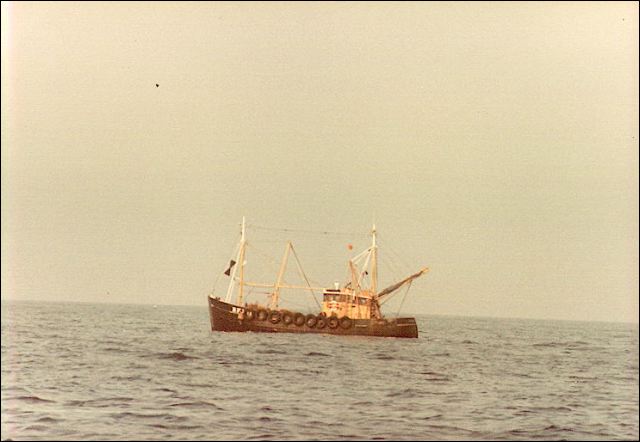


other Porthleven boats included the trawler Gamrie Bay, 


skippered and owned by father and son team David and Kevin Williams, seen here helping the Fern land her prawns...
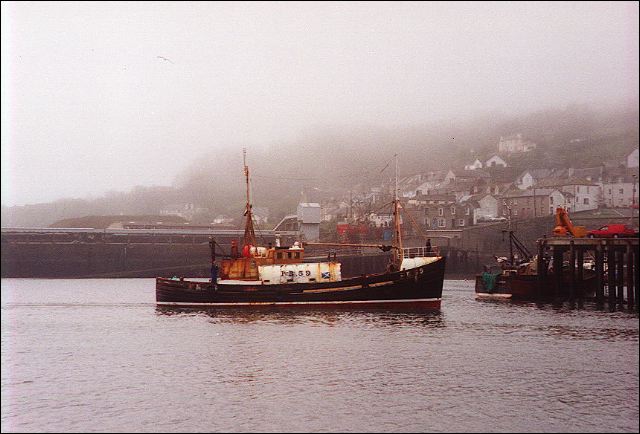


or the ex-prawn trawler that was converted to netting and named the Alice Louise for Jeremy Hosking, seen here just arriving in Newlyn from Scotland...
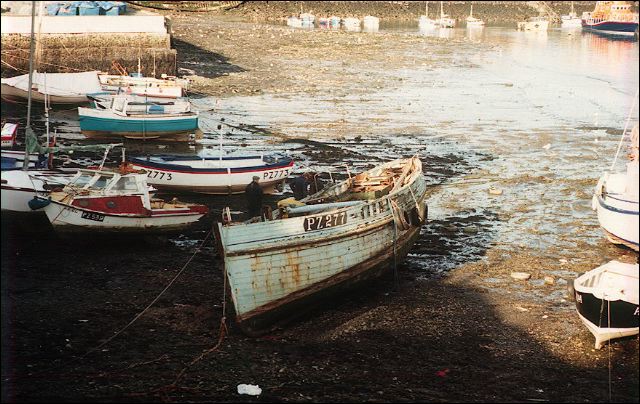
Pioneer in Newlyn before she was restored.
there was the Pioneer built by in Porthleven over 100 years ago and for some years owned by Cyril Gascoigne - brother of TV's University Challenge first host, Bamber - he dived, single-handed, for sea urchins from her...
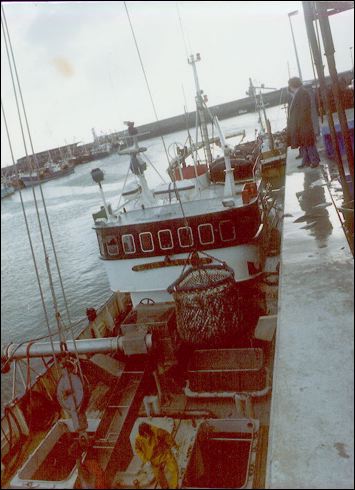
Porthlevener, Billy Pyle wearing that coat he had for eons is looking down from the quay as the Silver Harvester brails her catch of mackerel ashore in 1980.


also a lay preacher, Michael Hosking owned and skippered the largest boat fishing from Newlyn at the time, the Silver Harvester, in her time she beam trawled, mid-water and pair-trawled for mackerel, bottom trawled and controversially netted for tuna...

Billy Pyle was one of a number of Porthleveners who also crewed for Bill Tonkin aboard the Bonny Mary which was built in Porthleven in the 1960s. Billy Pyle is seen here on the left 'mending' (unraveling the snoods from the main line and putting the hooks back in order around the edge of the basket ready for baiting and shooting) a basket of lines as skipper Bill Tonkin gaffs a huge ling aboard...


while, bent over, fellow Porthlevener, Kipper guts a conger eel, he held the key job as shooter aboard the Bonny Mary...

Robert Tobbs owned the white tosher, (r) Girl Penny
at that time Robert Tobbs was also crew on the Bonny Mary, he left to take command of the tosher, Girl Penny...
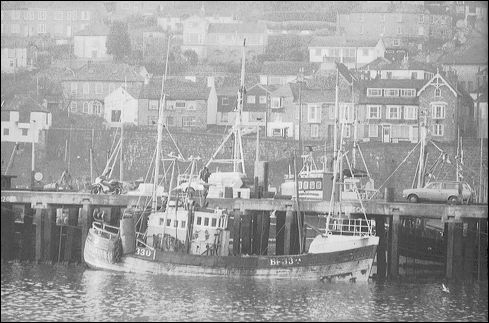

The Marina down by the head with a full load of mackerel in Newlyn in 1980.

Bobby 'Boxer' Laity's Marina trawled for mackerel, white fish and was one of a pioneering fleet of boats langoustine fishing on the Smalls - Boxer was yet another Porthlevener handy with his fists, hence the nickname.

And so to the...

Worst winter storms in memory. 

The winter of 2013-2014 saw the worst winter weather to hit the UK and particularly the south west for a generation, maybe more. In all, ten severe storms raged from November through to February and kept the entire Cornish fishing fleet in their respective harbours and the markets all but devoid of fish for the entire period.

In Porthleven, apart form the hardship caused through the loss of income, further damage was inflicted on the fishing community, on February the 5th 2014, huge seas smashed the timber baulks used to keep damaging seas out of the inner harbour. 

The following videos were all shot on that day and capture the ferocity of the storm in full.


Porthleven Art Baulk Project


The Porthleven Baulk Project is an imaginative, creative fundraiser. It is about creating beauty and hope from devastation, by using the broken baulks, destroyed by fierce nature and re-forming them into a wide variety of unique and stunning art pieces. Out of loss and darkness comes hope.

On that fateful day, ten boats sank in Porthleven harbour, and many fishermen also lost floats, nets and crab pots when the huge waves crashed through into the inner harbour. Work had already been impossible due to the extreme, on-going weather conditions and then the storms destroyed their means to catch.

The storm of 2013/ 2014 lasted for six months. During that difficult time, the Charity the Fishermen’s Mission, supported fishermen and their families. It was soon decided by the trustees and the board, that support was needed urgently. Payments of up to £500 would be given to fishermen upon the receipt of one household bill in arrears. Over £110,000 was given to fishing families in the South West alone.


The Porthleven baulks, individually are two tonnes of wood bolted together and with substantial metal caps. Normally, they are lifted into the harbour entrance by a crane. As a resident of Porthleven and a Regional Fundraising Manager for the Fishermen’s Mission (in Cornwall). Local Porthlevener and Mission man, Julian Waring walked past the devastating scene daily formed an idea; 
permission to use the wood was granted and the Porthleven Baulk Project was launched.


Unique Auction Opportunity

At least 80 artists have already agreed to paint on to the wood (in canvas cut sizes). Others are working with the wood to create mosaics, etchings, ceramic and glass. Craftspeople are creating items of furniture. Each piece will have a letter of signed authenticity to prove that these pieces are from the Porthleven baulks.

This is a unique opportunity to support The Fishermen’s Mission by purchasing not only a piece of social history but a celebration of enduring talent.

As Through The Gaps has enjoyed the company of sailing with fellow Porthleven fishermen over the years and was therefore honoured to be asked to contribute one of the pieces - this work is dedicated to them and those who fish out of the port today.


Blank canvas, always a daunting moment...


so a few coats of white gesso to seal the wood...


after watching the videos above and studying a number of photos...


an idea for the composition was formed...


 - one that would include the shattered end of the timber where the actual baulk (12" x 12" square) was snapped like a twig in two by the huge seas


on the easel ready for the first strokes...


to outline the basic image...


and creating the basic scene of the breakwater and iconic clockhouse...


awash with the huge seas and air filled with spume...


the masking tape was finally removed to create a border and the complete image recording the scene on February 5th at the height of the storm that destroyed so much.

At 6:30pm on Sunday Feb 5th, weather permitting, a fantastic lightshow will see photographs of all the art works projected on to the walls of Porthleven's famous clock tower.

The auction will be held on 18th March 2017 in the Atlantic Inn, Porthleven with an online auction as well. All the pieces will be on display at the Lifeboat House from the 4th to the 10th March 2017.

Follow the latest news here @Porthleven_Art.


Monday, 16 January 2017

Monday morning and the fleet is all at sea!


There was  precious little evidence that any fish made it to market this morning as...


there were a handful, literally, of boxes landed for sale...


the fish market...


and harbour were silent as the tide made its way to high water...


the only sings of life down the new quay were from Rowse Fishing's new build...


the netters are all in port over the big spring tide...


even the fishermen's cafe opposite the market was deserted first thing!


Sunday, 15 January 2017

Way down to Lamorna.


There's a pot of gold at the end of the rainbow, well recycling old fishing net is provinga pot of gold for some in the industry...


while Simon on the windy gun sees that the starboard side beam trawl is being put back together squarely...


Nathan keeps an eye on the beam as 5 tons of trawl are raised by the winch...


there are some strange looking growths on the new Lidl supermarket site at Wherry Town...


holiday in a place of artistic history, Lamorna Birch's studio can be rented...


they get some strange things washed ashore in the cove...


now that the old harbour wall has almost completely been destroyed by successive winter storms...


evidence of a hand-drilled bore hole in the harbour walls - Cornish miners were world-renowned for the hard rock mining skills which can be seen if you visit Geevor Mine near St Just...


the Gry Maritha heads back to Penzance past a bulk carrier anchored in deep water off Lamorna...


house on the river Gover, a homemade name plaque...


the cove is still home to several artists studios...


though it is a shame the artistic integrity does not extend to the Lamorna Wink's naffest pub sign, I mean a pirate with implants?!!!...


sunset in Mount's Bay...


a daily show of light, dusk and dark.

The Great Wave - a different perception.


Hokusai's The Great Wave of Kanagwa (Kanagawa-oki nami ur) is one of the most copied and re-imaged in the world. The woodblock print was published somewhere between 1830 and 1833.

In the scene, the boat is a oshiokuri-bune, a fast boat used to transport live fish from the Izu and Bōsō peninsulas to the markets of the bay of Edo. As the name of the piece indicates the boats are in Kanagawa prefecture, with Tokyo to the north, Mt Fuji, which is away in the background of the image is to the northwest, the bay of Sagami to the south and the bay of Tokyo to the east. 

There are eight rowers in the boat, clinging to their oars. Using the boats as reference, you can approximate the size of the wave: the oshiokuri-bune were generally between 12 and 15 meters long, and noting that Hokusai reduced the vertical scale by 30%, the wave must be between 10 and 12 meters tall.

The popular understanding of the image in the west is that of a boat heading for disaster, about to be overwhelmed by a huge sea - especially given the measurements determined in the previous paragraph. However, a better understanding of the image can be made if it is viewed, or perceived as you would if you were raised in Japan - where the reading of a page - or image - is the opposite to that of us in the West. To understand how this affects our response to the image can easily be achieved - by reversing the image so that we 'read' it the same way as if we were subject to the perceptual influence of the Japanese...


now the image provokes a different response - that of eight hardy fishermen taking on a huge seas they make their way back to port with their cargo of live fish.

More about Hokusai can be read here:

Ghost fishing - but just how much 'fishing' do these nets do??


There is no doubting the cause of divers in retrieving nets lost on wrecks and rough ground - nor publicising the work that they do - but using the term 'ghost fishing' suggests  that these lost nets - be they trawls, gill nets or pots continue to fish in the same way they do when first deployed.

Most of the gear in the videos is heavily covered in algae that in many cases has completely obliterated the net. Gill nets are made of fine, single strand mono-filament translucent nylon and rely on their near invisibility underwater to catch fish - when covered in algae the fish simply avoid them.  Trawl nets need to move through the water to catch fish - when lost over wrecks they provide a haven for small fish, crustaceans, molluscs and seaweed or algae - they may make a wreck more dangerous if it is dived on of course. Pots rely on fresh bait to attract crab and lobster into them - it would be every shellfishermen's dream to have post that caught crabs and lobster without bait as bait is the biggest single expense on a shellfishermen's end of year accounts!

No Fishermen likes to lose gear on wrecks or rough ground - it costs time, a lot of money and can in some circumstances be extremely dangerous - but it is a hazard of the job. Modern navigation and marine electronics technology has helped reduce the amount of gear lost through skippers being able to place their gear more accurately then ever before - and chart plotting software means they can be sure of recording and repeating fishing operations more safely.


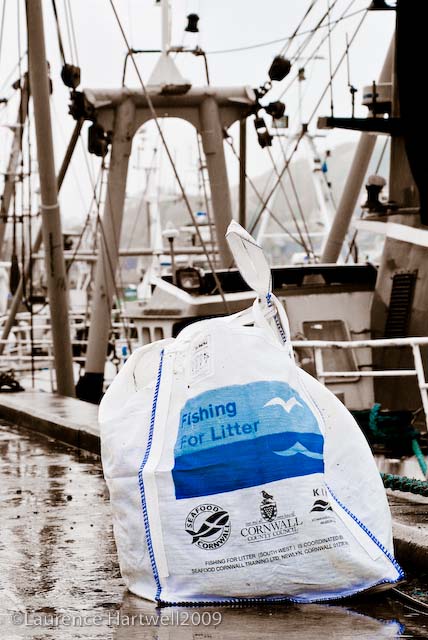
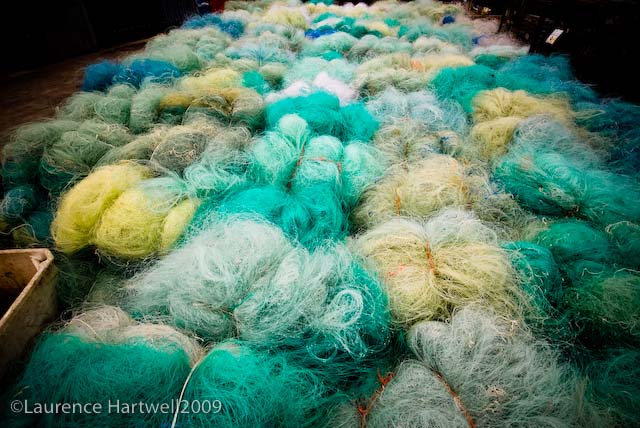
Newlyn and other ports have championed the recycling of nets through the Fishing for Litter campaign...


On a really positive note, locally a new start-up company FishyFilaments is running a crowdfunding campaign to develop the recycling of nylon fishing like the above into 3D printing filaments!


Here are some of the campaigns currently being fought under the unhelpful banner, 'Ghost Fishing':


In May 2016, the dive team of the Dutch Ghost Fishing Foundation helped a German Greenpeace campaign, with the goal of drawing attention to the sizable problem of ghost nets in the North Sea. After almost two weeks of ideal weather conditions—with bizarrely bad visibility underwater—the deck of the Arctic Sunrise boasted five enormous BIG BAGs (the Swedish eco-friendly garbage bag brand) full of nets and fishing lines. A considerable catch, but there is plenty more work waiting at the bottom of the German North Sea.

The full article appeared in X-RAY MAG


The rest of the Greenpeace campaign was spent on alternating dives to two unknown wrecks. One of the wrecks had clearly recognizable shapes, the other was mostly covered in sand, having been torn apart quite badly. But both suffered from a significant amount of “decoration”; they were covered with large trawler nets, but also a lot of trammel nets. We were diving not far from Denmark, a country with a sizable gill netting fleet—a fact that was clearly evidenced underwater.

We put the gill nets—made from thin nylon lines—mostly in old postal bags. The trawler nets were fitted with a number of lift bags and then cut into large pieces. The catch was so heavy the crew were unable to get it aboard. The nets were hoisted to the deck by the Arctic Sunrise’s crane.

After ten days of diving, the deck of the Greenpeace campaign vessel boasted five BIG BAGs filled to the brim with netting. Greenpeace oceans campaign leader, Thilo Maak, who dived on nearly every dive, was shocked, himself. He knew he was using this clean-up campaign to draw attention to a sizable problem, but to see the actual size of the problem up close like this was a real eye-opener, either way. And, realistically speaking, we were not even done yet. One of the wrecks still had a large piece of netting on it. We did not even have enough time left on this particular trip to cut it loose one bit at a time. And to think of the dozens of other wrecks out there on the Sylter outer reef yet to be cleaned? “We’ll go again next year,” said Maak. “We still have a lot of work to do.”

This video highlights some of the divers' work in recent years.


Friday, 13 January 2017

Guess what Americans on the Atlantic coast are being encouraged to eat?

Dogfish! - Why? Because the fishermen cannot even catch the annual quota they have been set!


Off the coast of Cape Cod, Massachusetts, there’s not much cod left, but there’s plenty of dogfish. It’s a creature most Americans have never heard of, much less consumed. Instead, Americans are eating imported tuna, salmon and shrimp, in a pattern that could wipe out the U.S. fishing industry. NPR News’ Allison Aubrey reports on a company that's promoting seafood caught at home.

Not that there is anything new about the fishery - or the lack of desire for Americans to heed the call and switch form cod to dog! Read this article which appeared in Virginia's Marine Resource Bulletin - in 1982!  There is even a few recipes to try.  Maybe we will be able to see dogfish on the menu of our local fish and chip shops again some time soon landing spurdogs has been banned for over 10 years in the UK.


#FishyFriday is here!


Four beam trawlers, two netters and a handful of handliners landed this morning following a very harsh 24 hours at sea for those unlucky enough to be out there...


big pollack...


big haddock...


and big monk were the order of the day from the netters...


while the beam trawlers popped a few boxes of Dover sole...


and lemon sole on the market...


keeping the merchant staff busy...


surprisingly, there were landings from some of the St Ives mackerel boys who must have pushed some severe weather in their punts yesterday to put this amount ashore!...


even by Newlyn standards, 24 tubs of cuttles is a lot of sepia...


just the one fish per box when the 'butt' or turbot are this big...


today's MSC Certified hake came courtesy of the Joy of Ladram...


and the Britannia V...


with the weather overnight having deteriorated to gales all but the biggest boats and netters took shelter back in the harbour... 


or landed early so berths were tight forcing the Trevessa V to take advantage of a big sporing tide land at the market...


along with the James RH...


big tide, big moon hanging over the harbour...


nearing the end of the morning's auction...


the last of the beam trawlers sale gets underway...


no fish from the Helford this morning...


signs of a promising day in the Bay...


a sure sign of poor weather when even the South West's biggest trawler spent the night in port...


along with Rowse's biggest crabbers.