Looks like local paper, The Cornishman has the right angle on the fishing industry - front page news for the first print run in 2017!
Thursday, 12 January 2017
Stop the press! - Out Through the Gaps.
Looks like local paper, The Cornishman has the right angle on the fishing industry - front page news for the first print run in 2017!
Calling all fishing wives, partners and girlfriends - get together!
Diary date: Newlyn's Training Hub in the harbour is playing host to a meeting next Thursday (19th) from 12:30-14:30. There is a FB page to follow for up-to-date info here.
Starting at 12:30 with refreshments, the program includes training delivered by Public Health Cornwall, which also aims to provide information on how and where to get support with various health concerns. They will also have Chris Ranford from the FLAG, who will talk about accessing funding and give examples of previously funded projects and initiatives.
Julian Wearing from the Fishermen's Mission will also be there, to talk about what kinds of help and support can the Mission offer to fishing families.
As part of the workshop, we are also launching a FB group called 'All in the Same Boat', which is aimed at connecting women in fishing communities across Cornwall.
ITQs: A Road of No Return
Rights Based Management and Small Scale Fisheries in the EU:
This paper sets out the LIFE position on Individual Transferable Quotas (ITQs). The Common Fisheries Policy (CFP) leaves open the possibility for EU Member States (MS) to establish systems of transferable fishing rights, and implementing the discard ban has rekindled the debate about introducing such rights. ITQs have caused no end of controversy in the EU small-scale and coastal fisheries (SSCF) sector and it is essential that we confront and examine this approach to allocating fishing rights1 , given the risk that they may make a comeback in the EU. ITQs are often put in place with the stated purpose of reducing overcapacity and improving economic efficiency, but the failure to consider equity along with other human rights aspects (civil and political, social, economic and cultural) of fishing communities has meant that ITQs have disadvantaged SSCF and prejudiced their ability to enjoy their human rights.
In this context, and given the extensive locally significant economic, cultural, social and environmental benefits delivered by the SSCF, it is vital to critically analyse any EU or Member State proposal for introducing ITQs against both intended and unintended harmful consequences that may result regarding SSCF, and to ensure that provisions that mitigate against such harmful consequences are included in any initiative.
Human Rights Versus Property Rights
This paper sets out the LIFE position on Individual Transferable Quotas (ITQs). The Common Fisheries Policy (CFP) leaves open the possibility for EU Member States (MS) to establish systems of transferable fishing rights, and implementing the discard ban has rekindled the debate about introducing such rights. ITQs have caused no end of controversy in the EU small-scale and coastal fisheries (SSCF) sector and it is essential that we confront and examine this approach to allocating fishing rights1 , given the risk that they may make a comeback in the EU. ITQs are often put in place with the stated purpose of reducing overcapacity and improving economic efficiency, but the failure to consider equity along with other human rights aspects (civil and political, social, economic and cultural) of fishing communities has meant that ITQs have disadvantaged SSCF and prejudiced their ability to enjoy their human rights.
In this context, and given the extensive locally significant economic, cultural, social and environmental benefits delivered by the SSCF, it is vital to critically analyse any EU or Member State proposal for introducing ITQs against both intended and unintended harmful consequences that may result regarding SSCF, and to ensure that provisions that mitigate against such harmful consequences are included in any initiative.
Wednesday, 11 January 2017
Buyers busy Wednesday in Newlyn
Apart from the usual landings from single handed punts and a few small inshore boats...
there were just the two beam trawlers to keep the buyers busy this morning with all the usual suspects were busy bidding...
Trelawney Fish...
Interfish Limited...
Smarts...
Wing of St Mawes...
South Coast Fisheries...
Newlyn Fish Company...
Bodmin Seafood...
PJ Tonkin & Co...
W Stevenson...
Seabourne Fish...
Falfish...
Marisco Fish...
Mousehole Fish...
Whitelink...
Tasty Mac Pac Ltd...
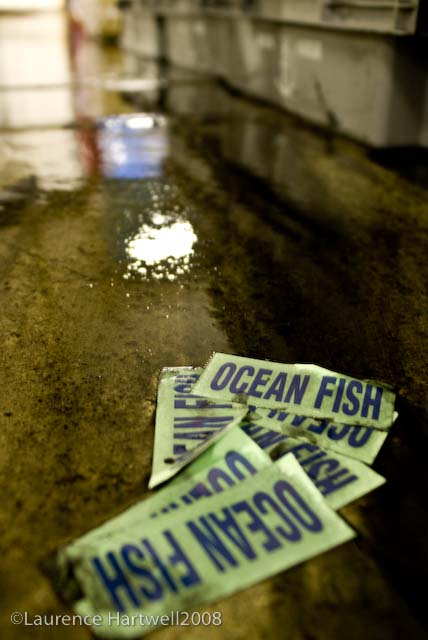
and Ocean Fish...
all of whom were paying top dollar for fish this morning...
with a good run of mackerel from St Ives stacked high in the fridge...
and a smattering of herring caught here in the Bay...
outside the market, the Stelissa was bust taking on new nets...
while the transport waits.
Tuesday, 10 January 2017
Slipping through the net - the control and enforcement of fisheries in England, France, Ireland and Poland
• There is a lack of harmonisation in sanctioning systems
• Too few sanctions are being imposed, and when sanctions are imposed, they are set at levels that are too low to actually be deterrent
• All have delayed the introduction of key EU requirements on the control of fisheries into their national systems
• All of these enforcement systems lack transparency, making it difficult for stakeholders to assess whether national obligations under the EU regulations are being met.
The report concludes with a summary of the implications of these shortfalls at EU level and what they mean in terms of the current evaluation of the Control Regulation, and its potential revision.
Read the country case studies:
England
France
Ireland
It's not just fishermen who get bullied by NHOs and those not qualified.
Bashing experts is not new. But, in this era of post-truth politics more and more of us are becoming increasingly unaware of the 'truth', largely as a result of personalised news feeds via social media, or simply denied access in seeking the truth behind any story as every mainstream source of news becomes increasingly exposed for bias of some sort.
This is not helped by our mainstream media largely controlled by a handful of men keen to see the global companies and regimes who provide the advertising revenues and other income needed to run their operations - even the BBC, for many the gold standard of unbiased newscasting is increasingly being exposed for supporting western, especially US viewpoints or closer to home, suporting the right. NGOs, especially the Greenpeace will nuance any story or situation to help rattle the collecting buckets in order to raise funds for 'good causes'. As a result, some journalists and editors see fit to increase or maintain their readership (more readers = better NRS figures = attracting more advertisers = more revenue) through using sensational headlines where the sensation matters more than the truth
Even the Sunday Times (sistership to the 'Thunderer', as the Times was often referred to) once independent but now owned by Newscorps - Murdoch's global media empire generally sway their allegiance to the governing elite of the day. In 2012 the fishing industry felt the full force of thier biased media attention when the Sunday Times' front page ran with the headline, "Only 100 cod left in the North Sea". This was particularly galling for many of the North Sea fleet who had long since realised that they could control stock levels by fishing responsibly and the signs were there even than that cod stocks, far from consisting of 100 geriatric examples were in fact growing year-on-year.
More recently, Greenpeace used the plight of small (Under 10m) fishing boats - who between them catch just about every species of fish available in the North Atlantic - and matched it against the might of the largely British flagged but Dutch owned freezer trawler fleet who only catch mackerel, scad and herring in huge quantities - by using the tonnage as the statistic of comparison for very low value fish, little of which goes for human consumption - eg the Cornelis Vrolijk catches 23% of the UK fish quota - in reality, there is little connection between the two fisheries so to compare them is meaningless - other than to sensationalise the story with inappropriate statistics when the situation came about after fish quotas were awarded monetary value in the UK by dint of the licensing system based on individual track records for fish caught - and, of course, through owners who sold their licences to fish out of the UK.
In recent years fishermen and scientists have begun to enjoy the positive results of a better communicated world thanks to the internet - it is easier for scientists to talk directly with individual fishermen using social media - and it is easier for fishermen to join in the debate at every stage of development through open forums - some organisations are at last making use of largely free technologies to livestream meetings and conferences to widen participation and inclusivity. As a result, more fishermen and more members of the public are becoming more aware of how organisations like PEW and the Oak Foundation fund and influence directly or indirectly the activities of NGOs (like Greenpeace, WWF) to meet their own ends.
While science is not everything it would like to be it is there to give confidence by supplying evidence based on data gathered in a scientific way and letting the numbers do the talking. Fishermen supply their own catch data from vessels over 10m - live, via satellite for every vessel over 15m and this is potentially a far more powerful source of data to lobby compared with that gathered by a handful research vessels constrained by budget and opportunity.
So it is important, as this article from the USA elaborates, to be mindful of the interests and lobbying power of those environmental organisations that are all too ready to use rather than the industry when it serves them. As the writer Dr Sally Lutcavage says;
The more open the debate, the more accurate the data and the more the industry will develop its scientific credibility with all sectors - aside form a handful of over-zealous activists of the kind you can find in any sphere of human activity.
This is not helped by our mainstream media largely controlled by a handful of men keen to see the global companies and regimes who provide the advertising revenues and other income needed to run their operations - even the BBC, for many the gold standard of unbiased newscasting is increasingly being exposed for supporting western, especially US viewpoints or closer to home, suporting the right. NGOs, especially the Greenpeace will nuance any story or situation to help rattle the collecting buckets in order to raise funds for 'good causes'. As a result, some journalists and editors see fit to increase or maintain their readership (more readers = better NRS figures = attracting more advertisers = more revenue) through using sensational headlines where the sensation matters more than the truth
Even the Sunday Times (sistership to the 'Thunderer', as the Times was often referred to) once independent but now owned by Newscorps - Murdoch's global media empire generally sway their allegiance to the governing elite of the day. In 2012 the fishing industry felt the full force of thier biased media attention when the Sunday Times' front page ran with the headline, "Only 100 cod left in the North Sea". This was particularly galling for many of the North Sea fleet who had long since realised that they could control stock levels by fishing responsibly and the signs were there even than that cod stocks, far from consisting of 100 geriatric examples were in fact growing year-on-year.
More recently, Greenpeace used the plight of small (Under 10m) fishing boats - who between them catch just about every species of fish available in the North Atlantic - and matched it against the might of the largely British flagged but Dutch owned freezer trawler fleet who only catch mackerel, scad and herring in huge quantities - by using the tonnage as the statistic of comparison for very low value fish, little of which goes for human consumption - eg the Cornelis Vrolijk catches 23% of the UK fish quota - in reality, there is little connection between the two fisheries so to compare them is meaningless - other than to sensationalise the story with inappropriate statistics when the situation came about after fish quotas were awarded monetary value in the UK by dint of the licensing system based on individual track records for fish caught - and, of course, through owners who sold their licences to fish out of the UK.
In recent years fishermen and scientists have begun to enjoy the positive results of a better communicated world thanks to the internet - it is easier for scientists to talk directly with individual fishermen using social media - and it is easier for fishermen to join in the debate at every stage of development through open forums - some organisations are at last making use of largely free technologies to livestream meetings and conferences to widen participation and inclusivity. As a result, more fishermen and more members of the public are becoming more aware of how organisations like PEW and the Oak Foundation fund and influence directly or indirectly the activities of NGOs (like Greenpeace, WWF) to meet their own ends.
While science is not everything it would like to be it is there to give confidence by supplying evidence based on data gathered in a scientific way and letting the numbers do the talking. Fishermen supply their own catch data from vessels over 10m - live, via satellite for every vessel over 15m and this is potentially a far more powerful source of data to lobby compared with that gathered by a handful research vessels constrained by budget and opportunity.
So it is important, as this article from the USA elaborates, to be mindful of the interests and lobbying power of those environmental organisations that are all too ready to use rather than the industry when it serves them. As the writer Dr Sally Lutcavage says;
"How do you react to false, deceitful accusations from non-experts, from unethical individuals, from persons or NGO’s with books to sell, or a point of view to peddle to an unsuspecting public or community, or politicians. Points of view, that when challenged by facts and data, get in the way of fund-raising campaigns, messages to the media, book sales, rich donors, and perhaps the most insidious - attempts to influence US fisheries and ocean policies."This is typical of the sort of abuse shown by non-experts:
The more open the debate, the more accurate the data and the more the industry will develop its scientific credibility with all sectors - aside form a handful of over-zealous activists of the kind you can find in any sphere of human activity.
Monday, 9 January 2017
UK Coastguard helicopter flies 100 miles just inside French waters to evacuate unwell crewman from Newlyn beam trawler, Resurgam PZ1001
While most of us were still asleep this morning, a blast of cold sea air was being felt by UK Coastguard Paramedic Winchman Niall Hanson as he was winched onto a UK fishing vessel 100 nautical miles south of Newquay to assist an unwell crewman.
Co-ordinated by the UK Coastguard Operations Centre at Falmouth, the Newquay search and rescue helicopter flew over rough seas and just inside French waters to evacuate the sick crewman from the UK vessel. The crewman was airlifted to Treliske Hospital by the helicopter crew of Captain Mark Coupland, Co-Pilot ‘Sharky’ Finn, Paramedic Winch Operator Jason Bibby and Paramedic Winchman Niall Hanson. His condition was not thought to be life-threatening and we wish him a speedy recovery.
The footage was filmed by the helicopter team.
Clearly visible in the video during the rescue, both beam trawls are suspended from the end of the derricks to help stabilise the boat and reduce the degree of roll while the skipper steams at full speed just off the wind. This helps reduce any dramatic variations in movement which, given the proximity of the stern mast to the high-line can only make the operation safer. Notice how the winchman applies opposite pressure to the high-line as the winch reels in the diver and casualty to minimise the sway.
All skippers know the correct procedure for such an incident, so in all likelihood the only contact between the boat and the rescue helicopter would have been when the navigator calls the skipper of the boat and reminds him to "please maintain your present course and speed" - the height of a professional operation for which the fishing community of the UK can only be ever grateful.
Subscribe to:
Comments (Atom)