Tuesday, 29 April 2014
Another glaring example of someone naively wading into managing the fishing industry!
Fisheries leaders have warned Alex Salmond that he risks a clash with the fishing industry after he claimed that 12 European nations could be barred from Scottish and Norwegian waters if an independent Scotland was refused EU membership.
In a keynote speech to the College of Europe in Brussels, the first minister said Scotland had much to offer the EU and called for a "practical, common-sense" approach to ensuring it inherited membership after leaving the UK.
But in a passage that has alarmed the fishing industry, Salmond warned that the alternative would be "the fishing fleets of 12 countries being denied any access to Scottish waters and, as a consequence, their access to Norwegian waters, which is also dependent on Scottish access."
One senior industry figure, who asked not to be named, said Salmond's words appeared to be a threat that "stokes considerable fear in our hearts".
David Mundell, the Scotland Office minister, said Salmond had made a significant legal and diplomatic error by threatening to block access to Norwegian waters. He said an independent Scotland would be legally obliged to allow safe passage to foreign ships with Norwegian fishing rights.
He said Scottish fleets fished heavily in other EU waters, including in North Sea areas owned by the rest of the UK.
"It has been a telling day for the first minister's judgment," Mundell said. "In the morning we read about his admiration for Vladimir Putin [the Russian president] and by afternoon he was threatening EU members with fishing ground blockades – the very members he would need to unanimously accept a new Scottish state. It has not been a masterclass when it comes to his diplomacy skills.
"The truth is, only a very small proportion of other member states' catches are taken from Scottish waters, and in any accession negotiations other member states would be more likely to press for improved access to Scottish fishing grounds in the North Sea than to make concessions for Scotland."
Bertie Armstrong, chief executive of the Scottish Fishermen's Federation, said he would be writing to the first minister asking him to explain what he meant.
"We need to ask the Scottish government for clarification of exactly what he means," Armstrong said. "Is this a threat to the rest of Europe or is fishing being placed on the table as a bargaining counter?"
He said that rhetoric would involve problems with the Spanish and Irish governments, in particular, but also raised questions about Scotland's rights to fish in other UK waters post-independence – effectively closing off large areas of the North Sea and Irish Sea.
Story courtesy of the Guardian.
In a keynote speech to the College of Europe in Brussels, the first minister said Scotland had much to offer the EU and called for a "practical, common-sense" approach to ensuring it inherited membership after leaving the UK.
But in a passage that has alarmed the fishing industry, Salmond warned that the alternative would be "the fishing fleets of 12 countries being denied any access to Scottish waters and, as a consequence, their access to Norwegian waters, which is also dependent on Scottish access."
One senior industry figure, who asked not to be named, said Salmond's words appeared to be a threat that "stokes considerable fear in our hearts".
David Mundell, the Scotland Office minister, said Salmond had made a significant legal and diplomatic error by threatening to block access to Norwegian waters. He said an independent Scotland would be legally obliged to allow safe passage to foreign ships with Norwegian fishing rights.
 |
| Stormy waters ahead! |
"It has been a telling day for the first minister's judgment," Mundell said. "In the morning we read about his admiration for Vladimir Putin [the Russian president] and by afternoon he was threatening EU members with fishing ground blockades – the very members he would need to unanimously accept a new Scottish state. It has not been a masterclass when it comes to his diplomacy skills.
"The truth is, only a very small proportion of other member states' catches are taken from Scottish waters, and in any accession negotiations other member states would be more likely to press for improved access to Scottish fishing grounds in the North Sea than to make concessions for Scotland."
 |
| The fishing industry is not that easy to sort! |
"We need to ask the Scottish government for clarification of exactly what he means," Armstrong said. "Is this a threat to the rest of Europe or is fishing being placed on the table as a bargaining counter?"
He said that rhetoric would involve problems with the Spanish and Irish governments, in particular, but also raised questions about Scotland's rights to fish in other UK waters post-independence – effectively closing off large areas of the North Sea and Irish Sea.
Story courtesy of the Guardian.


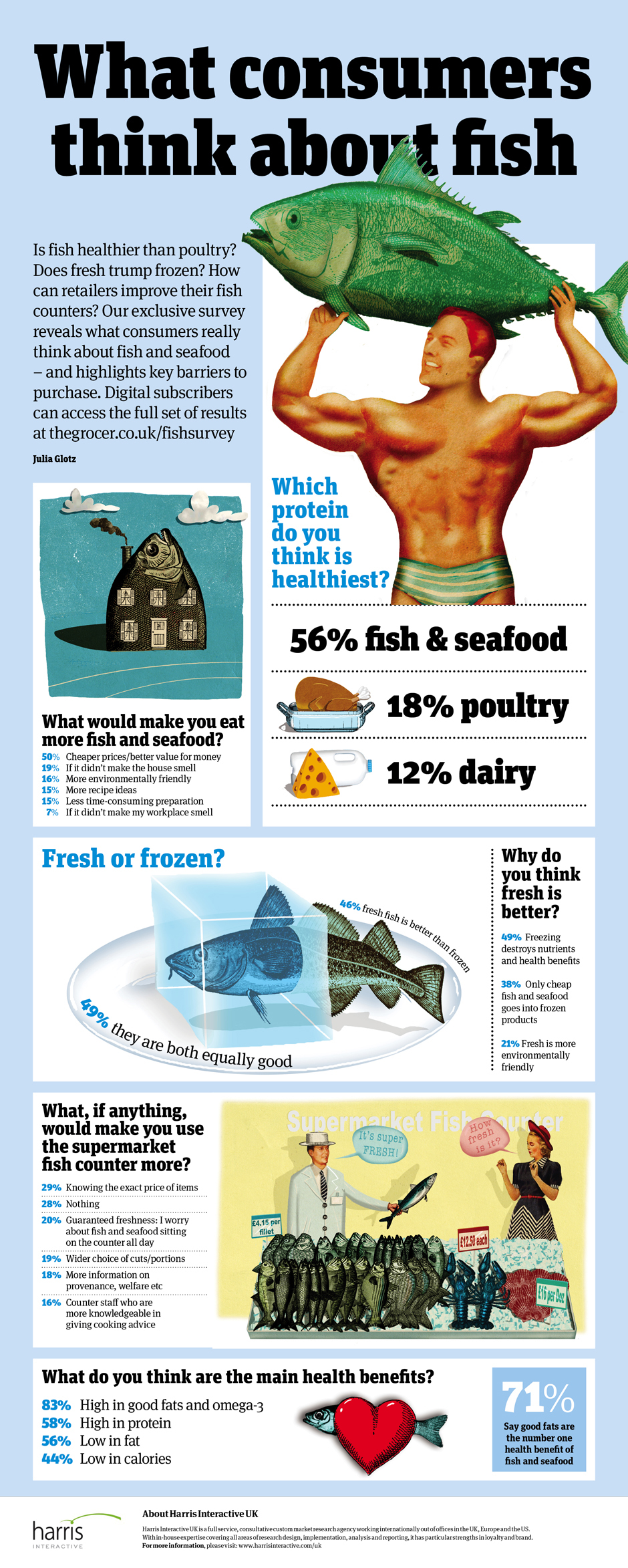
What consumers think about fish
From our Brittany correspondent - what the Breton's are doing post winter storm damage
Here's a few words from an ex-pat living in Brittany monitoring the local press and media. It seems the French Government are being a little more supportive of those coastal regions hit hard by the winter storms - the speed with which they have actioned repairs in stark contrast to the minimal work carried out in Cornwall where work on all but the most obviously hazardous damage has ground to a halt following David Cameron's 'money no object' declaration post storms!
"Just as in Cornwall, the Breton coast was battered by the February storms. The damage to harbours and sea defences is estimated to have cost around 10 million euros (excluding damage to private property). The French government has just issued an official declaration concerning storm damage, which enables natural disaster insurance to come into play and repair work is underway in the most seriously affected areas, particularly around Penmarc’h and Le Guilvinec. Breakwaters have had to be rebuilt or strengthened following recent breaches along this stretch of the coast.
Among the most visible damage, the disappearance of dunes leading in some places to 20 metres of land being lost. Local authorities immediately moved into action to ensure the coastal paths and shoreline would be cleaned up before the summer season, and now they are moving into the second phase reflecting on how to ensure protection in the long term. Attitudes have changed considerably over the past few decades. Piling up of rocks is now rejected and limited to harbour defences with alternative methods being looked into for the general coastline, as these “exceptional” conditions are expected to become more frequent in the coming years. Tourist leaders remain optimistic suggesting that the spectacular storm images may even encourage visitors to come to Brittany this spring and during the summer season.
While the forces of nature cannot be controlled, the impact of man’s behaviour on the environment and landscape can be changed. In recent years, there has been particular concern about boats being abandoned in ports and inlets around the coast of Western Brittany. For some owners, the cost of removing and dismantling old boats is prohibitive. The local authorities, including Finistère Council and Douarnenez Council have just launched a trial to clean up the ports. A disposal site and pick-up service should enable owners to dispose of their unwanted boats at a much lower cost. Recycling is the key to the funding proposal and will determine whether the trial will be extended, with the exact cost of the service yet to be announced."
Subscribe to:
Posts (Atom)