'>

Sunday, 3 February 2013

Rugby star and son of Newlyn fisherman going places

Chief's full-back Jack Nowell heads for the touch line .

Destined for greater things, Jack Nowell, sone of Michael Nowell skipper of the beam trawler Louisa N graces the cover of yesterday's programmes for the Exeter Chiefs' in their game against Northampton. Unlucky not to be awarded Man of the Match (again), a try scoring young Jack played an outstanding game of rugby as the Pinkun's crushed the Saints 28-19 to secure a top place in the table. Young Jack, who should have been playing for England U20s against Scotland will remember one moment in the match when he took out opposite number Ben Foden with a crunching tackle. Newlyn, born and bred, England's future full-back is in the making.

False alarm call for Lizard and Pelnee lifeboats.

Two of the most recent Penlee lifeboat shouts tracked by Vesselracker AIS

Both the Lizard and Penlee lifeboats were involved in a shout on Saturday evening - never the most social time to have the bleeper go off. Undaunted, both boats put to sea after red flares were reported off Mullion. Sadly, the time spent at sea searchin was in vain as it eventually became clear that the shout was indeed a false alarm.

An expensive waste of time, effort and not to say cost of fuel with around 3000hp worth of engine power being unleashed between the two vessels.

Friday, 1 February 2013

It's what the French do!!

Well, they buy French of course!


Australia Launches World's First Seafood Flavour Wheel


THIS year, food lovers will be able to describe the unique regional flavours of their seafood with a sophisticated new sensory vocabulary, which forms part the world’s first seafood flavour wheel.
A team led by Dr Heather Smyth (right), a sensory scientist at UQ’s Queensland Alliance for Agriculture and Food Innovation (QAAFI), has described the key flavour and aroma characteristics of several popular seafood species from the Eyre Peninsular, South Australia.
Launched in Adelaide on 5 December, the flavour wheel identifies the region’s unique seafood characteristics using a sensory vocabulary created for retailers and producers to describe and market the appeal of their seafood.
For example, Eyre Peninsula blue mussels smell like a “fresh ocean breeze”; they are tender and sweeter to taste with a “savoury roast meaty with crustacean flavour”.
This new vocabulary is designed to help wholesalers, retailers, restaurateurs and foodies evocatively describe Australian seafood with terms and descriptions understood nationally and internationally.
As a commercial product, the flavour wheel is expected to boost the $3.4 billion Australian seafood industry* by encouraging consumer confidence, interest and awareness at point of purchase.
Australia produces more than 240,000 tonnes* of high-quality seafood annually, with South Australian seafood featuring bluefin tuna, yellowtail king fish, King George whiting, snapper, blue mussels, pacific and angasi oysters, southern calamari, Spencer Gulf prawns, Black-lip and green-lip abalone, southern rock lobster and sardines.
“It is well known that wines grown in certain regions have a flavour imparted to them from the environment and the same is true for seafood.” Dr Smyth said.
“The seafood grown in this specific region has a characteristic flavour from its unique ocean environment.”
Interestingly, the sensory data showed Eyre Peninsular seafood displayed a depth of complexity and flavour intensity not always found in seafood from other regions. This was combined with a common subtle herbaceous flavour characteristic in all the seafood from the Eyre Peninsula, described by their sensory tasting panel as snow pea or steamed broccoli.
“The appealing fresh herbaceous flavour was a common factor and is probably part of why this seafood region is so successful,” Dr Smyth said.
This project is an extension on previous research conducted by Dr Smyth in 2010 where she developed the first Australian native flavour wheel that targeted a concise, consistent and accurate marketing message of the flavours of Australian native ingredients for customers.
Dr Smyth has also proposed the development of a national prawn flavour wheel which will use the same sensory vocabulary to describe the different species, seasons and regions of Australian prawns.
The Eyre Peninsular Regional Development Board will lead the launch of the seafood flavour wheel which has been the product of a year-long project funded by the Fisheries Research and Development Corporation (FRDC) and the Queensland Department of Agriculture, Fisheries and Forestry.
CONTACTS
Dr Heather Smyth
Research Fellow, Centre for Nutrition and Food Sciences
Queensland Alliance for Agriculture and Food Innovation (QAAFI)
The University of Queensland
Tel: (07) 3276 6035

Inshore Fisheries Conference 2013 - Inverness


As part of the continued work on developing a sustainable and well managed fishery, Marine Scotland is hosting a conference for Inshore Fisheries on 8 February 2012 in Inverness. 


Throughout the conference, Marine Scotland will highlight the continued commitment of the Scottish Government to the fishery and engage with all stakeholders to hear their views. 

This conference will bring together the entire industry for the first time and provide an opportunity to share views and ideas, and to discuss the future management of this important fisheries sector for Scotland. 

Full details are provided in the online leaflet about the conference and you can register to attend through this link


Maybe we could muster the same support for the future of fishing in the UK?

The people of Britain did it for the forests of our beloved countryside. It would be good to think the fishing industry might one day garner this level of support!

Brilliant timeline graphic showing the strength of people power when given a voice via the internet and modern social networking tools like Twitter, Facebook, email and the voracity of viral networking.  


Thursday, 31 January 2013

Fish tales: new art show at Two Temple Place trawls Cornwall's past

From oyster boat to pilchard-press, Roo Gunzi's collection of Cornish cultural treasures marks a sea change for one of London's grandest buildings Share38

Fisherman hauling in nets, pilchard-pressing devices, and d'Artagnan: it's the Cornish art survey of a lifetime, but it's not in the west country – it has just opened in a remarkable Victorian building off the Strand in London. Featuring paintings made in Cornwall in the late 19th and early 20th centuries, the exhibition includes many that have been in store for decades, and one not exhibited for well over a century.


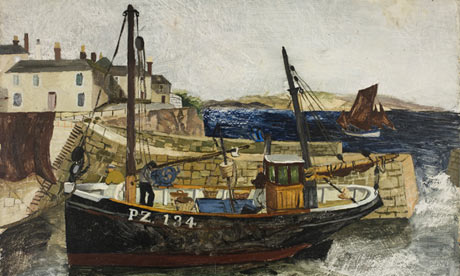
Pilchard driver in Mousehole oil on board by Christopher Wood


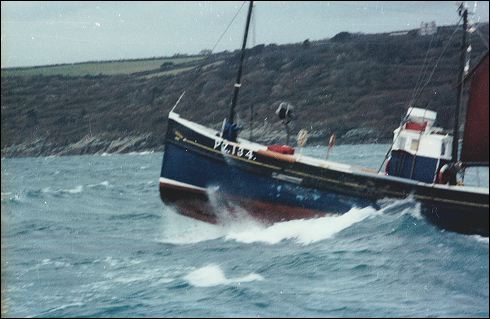
The same boat photographed steaming off Mousehole when hand lining for mackerel in 1978 
Two Temple Place was built in 1895 as a London bolthole for the American publishing and business tycoon William Waldorf Astor, later Viscount Astor, in truly startling gothic-Tudor-renaissance style. By coincidence the same architect, John Loughborough Pearson, was also responsible for Truro cathedral. Astor would have been astonished to see a Cornish oyster-fishing boat, on loan from the Maritime Museum in Falmouth, taking up much of the floor of his palatial library.

The building is now owned by a charity, the Bulldog Trust, which has launched a programme of annual exhibitions based on regional collections to open up the space to visitors. Palatial … Two Temple Place in London. Photograph: Will Pryce Curator Roo Gunzi, who's completing a thesis on one of the best-known artists, Stanhope Forbes, has worked in partnership with the Royal Cornwall Museum in Truro, but she has also tracked down paintings in private collections and museum stores all over the country. One gigantic painting by Forbes, showing the interior of a blacksmith's shop, normally hangs in the council offices in Ipswich. The artist began painting it on the spot, but was so overcome by the heat and smoke that he had to resort to reconstructing the scene in his Newlyn studio. Another huge canvas, a pair of horses drawing a block of newly quarried stone, has come from a private collection and hasn't been seen in public since 1905.

Another painting of "seine" fishermen dragging their catch was completed in 1897 by Charles Napier Hemy – after 14 years of making studies for it. It caused a stir when initially exhibited in London, celebrated as "a sea piece of the first order", but has been in the Tate stores for decades.

Gunzi has also borrowed some of the real objects painted by the artists, including a miner's barrow, an iron and granite weight for pressing pilchards, and a wooden box used to carry fish from the boats to be sold on the beaches. Detail from Henry Scott Tuke's Portrait of Jack Rolling (1858-1929). Photograph: The Tuke Collection Hilary Bracegirdle, director of the Royal Cornwall Museum, said: "It's a magnificent opportunity for us to have these pictures seen together anywhere, never mind in London – there is no county museum service covering Cornwall, so we're used to battling it out alone. I hope this makes people more aware of the cultural treasures that we do have in the county."

But visitors may find themselves helplessly distracted by the building, which has some of the most spectacular – if barking – interiors in London. While the exterior is startling – topped with a copper weathervane in the shape of Christopher Columbus's ship – the inside almost defies description, with a gemstone hall floor, stained glass Swiss scenes, and a frieze of characters including Desdemona, Bismarck, Lorenzo de' Medici and Mary Queen of Scots. And the mahogany staircase is adorned with figures from the book Astor considered the greatest ever written: Alexandre Dumas's The Three Musketeers.

"It certainly isn't the easiest of spaces to hang paintings in," Gunzi said, stepping back to look at a row of gnarled weather-beaten faces, portraits of people who would have been discomfited to find themselves in such grand surroundings. "But I think, in the end, it has worked surprisingly well."


View Larger Map

Venue: Two Temple Place, London Until 14 April