'>

Monday, 30 May 2022

Final #FishyFriday and a Moray in May.

As far as we know, this is only the second Moray eel landed in Newlyn in living memory...


unlike lobsters which are landed by the ton every week...


an unusually big shot of cod for this time of year...


by special licence,  a handful of netters can land spurdogs up to 180 stone - that's 11043.05kg in new money per month...


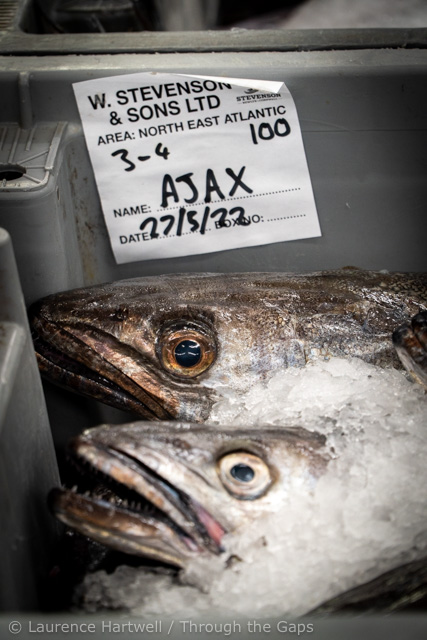
they, along with these cracking hake made up Friday's fish landings...


there's two sides to every turbot...


never short of Dovers...


whereas mackerel are still heading the hard-to-catch list...


they look good enough to eat raw...


it's Dory time...


these Mediterranean octopus make delicious eating...


in between trips...


first big yellow-welly cat for the year.


Open Days at SCT - Tuesday 31st May and 21st June 2022.


Want to be a fisherman?


31 May and 21 June from 10.00 
Please call in at SCT Training HUB in Newlyn.

Both Open Days will give anyone of any age with an interest in becoming a fisherman a fantastic opportunity to meet and talk directly with istructors and skippers from Newlyn.

You will have the opportunity to explore the different routes into a career in fishing including what qualifications you need, finding work and the different roles within the industry. Our experienced Instructors and some local Skippers will be on hand to answer any questions you might have.

Programme for the Day:

  • 10:30 Welcome and Introduction
  • 11:00 Newlyn Harbour Tour with Andy Wheeler
  • 11:30 Routes in working on fishing boats
  • 12.00 Knots & Ropes Workshop with Freddie Bates
  • 1:00 Refreshments and meet local skippers

These events are part of the recruitment and build up to the 3-week introduction to commercial fishing courses running in July, but will also serve as early taster days for the upcoming fishing apprenticeship. SCT want to show that there are routes into working on fishing vessels and to let people know what qualifications we can offer.

SCT have been working alongside careers advisors to notify them of these events, so will be specifically targeting school leaver age not just people who are already working. As part of the taster days, we are trying to make sure we get some younger fishermen involved, to help build discussion and answer any questions.

Commercial fishing is an incredibly rewarding way to earn a living - and, as a bonus, experience life at sea with all that it has to offer.


SEAFOOD CORNWALL TRAINING 


Admiralty Boathouse
23 The Strand
Newlyn
PENZANCE
TR18 5HL
United Kingdom

Tel: 01736 364324

info@seafoodcornwalltraining.co.uk

We are open from 8.30am to 4pm, Monday to Friday. 
The office will be closed on 2 and 3 June Jubilee Bank holiday. We will reopen 6 June.

All enquiries are treated in confidence.

Thursday, 26 May 2022

MMO MOVES ON RESTRICTIONS IN 13 MPAS


The MMO has launched a ‘call for evidence’ on the impacts of fishing activity in 13 MPAs, reports Tim Oliver.

It says the evidence call is to progress conservation efforts in the MPAs. It follows new byelaws to prohibit ‘damaging fishing activity’ in four MPAs last month, including Dogger Bank and The Canyons, which will come into force on 13 June (Fishing News, 28 April, ‘Government announces new byelaws for MPAs’).

The MMO is seeking views on the impacts of bottom-towed gear (BTG) fishing in the MPAs, which contain some of the most sensitive features at risk from bottom trawling.

The evidence put forward will be used to inform the MMO’s draft assessments ahead of formal consultation in the autumn on management of the sites.

The NFFO slammed the announcement as another step in the rushed implementation of management measures in MPAs, which gave no time for proper consultation and assessment of complex issues. It would also create more displacement issues which the government was doing nothing to address, it said (see below).

Map showing the Stage 2 MPAs. (Image: MMO)

The call for evidence applies to the following ‘Stage 2’ MPAs:

  • Cape Bank
  • East of Haig Fras
  • Farnes East
  • Foreland
  • Goodwin Sands
  • Haig Fras
  • Haisborough, Hammond and Winterton
  • Hartland Point to Tintagel
  • Land’s End and Cape Bank
  • North Norfolk Sandbanks and
  • Saturn Reef
  • Offshore Brighton
  • South of Celtic Deep
  • Wight-Barfleur Reef

The MMO said it would review all the information received, carry out ‘appropriate consultation’ with stakeholders, and implement management measures to ensure the MPAs are protected.

It said: “Our intention is that the MPA fisheries assessment will be finalised, and any necessary management implemented, by summer 2023.”

Further proposals and another call for evidence on Stage 3 of the MPA management measures will come in the autumn.

This will cover everything not already covered by the Stage 1 and 2 MPA management processes, including how all other fishing gears will be managed in MPAs, and protection of highly mobile species.

The government intends that all management measures in MPAs will be in place by the end of 2024.

The creation of the draft MPA fisheries assessment for the 13 MPAs has involved analysing the best available evidence to determine the resilience and recoverability of selected reef and rock features to the impacts of BTGs, said the MMO.

Fishing activity data was also used to understand the level of activity in each of the sites.

Input and advice was also sought from the Statutory Nature Conservation Bodies and IFCAs on the draft assessment.

Before the final decision on management measures to be adopted and any byelaws, there will be a formal consultation in 2023.

The MMO is considering the following high-level management options to further the Stage 2 MPAs’ conservation objectives:

Option 1: No fisheries restrictions. Introduce a monitoring and control plan within the site.

Option 2: No statutory restrictions. Introduce a voluntary agreement.

Option 3: Reduction of pressures associated with BTG(s) of concern, through zoned management (partial site prohibition of these gears over areas of highly sensitive designated features).

Option 4. Removal of pressures associated with BTG(s) of concern through a whole-site prohibition of these gears.

“Any management measures will apply equally to all fishing vessels, regardless of nationality,” says the MMO.


The call for evidence will run until 10 July. The draft MMO assessment documents, including all relevant information on how to contribute to this process, are available here.

Tuesday, 24 May 2022

FWA calls for legislation change to protect migrant workers in UK fishing


As usual, some parts of the media are quick to use what are the actions of a minority to exaggerate or distort the real picture - never let the truth get in the way of the real story it seems when it comes to lurid headlines and selling papers or subscriptions. As a result of a very negative story recently published in the Guardian the Fishermen's Welfare Alliance was moved to publish this on behalf of all those (the vast majority) of skippers and boat owners.

The Fishermen’s Welfare Alliance released a full statement on the recent reports from the ITF and the University of Nottingham.

Speaking on behalf of The Fishermen’s Welfare Alliance, Elspeth Macdonald, chief executive of the Scottish Fishermen’s Federation, said: “It is a reality that migrant workers are a vital and likely permanent feature of parts of the UK fishing sector – much as they are in other industries and professions. We value the contributions these workers make to our industry and in turn we want them to feel valued. They are skilled individuals, and fishing industry representatives worked hard for fishing crew to rightly be recognised as skilled workers in the government’s new immigration system.

Maritime Systems Ltd - IVMS device under-12 metre fishing vessels “The FWA therefore unreservedly condemns the reports of abuse and exploitation that were published last week. Such behaviour is deplorable and utterly indefensible. However, it is wrong to assume that the issues raised are endemic across the UK fishing fleet – they are not, and indeed the University of Nottingham report made clear that its findings were based on a small sample that was not chosen at random, so its findings cannot be generalised.

“The UK fishing industry strives to be a modern and attractive employer. It is clear that these reports, while they represent a very small and atypical minority, undermine the credibility of this ambition. We are disappointed that, rather than working with us, the University of Nottingham and the ITF chose not to engage the FWA in its work, or to share the details of their research prior to its release.

“Lurid headlines leave a stain on the whole industry, regardless of the sample size and methodology used. They tar the vast majority of fishermen who are horrified by these reports with the same brush as the perpetrators of the crimes. They also serve to undermine the efforts industry is making to encourage fishers to come to the UK through the skilled worker route. We deplore ill treatment of anyone in our industry, but we also deplore the misrepresentation of our industry.

“There is a raft of strong, protective modern legislation in place in the UK fishing industry, and active and engaged regulatory bodies with powers to enforce it. The MCA recently undertook an unannounced inspection campaign of hundreds of fishing vessels across the whole of the UK. The MCA did not raise any issues with industry concerning the working and living conditions or treatment of fishing crew.

“What the reports have done, however, is shine a light on issues that we have been raising with government for many years – that the transit visa system is flawed and that the skilled worker route which is now available, is not working. It is unfortunate that the reports did not tell the full story. Those parts of the fishing industry that rely on migrant crew have been seeking an alternative to the transit visa for many years now. We hope that the ITF research highlights why the fishing industry needs an alternative immigration option, and why the government must work with us to make the skilled worker route actually work.“

Ms Macdonald added that the immigration system needs to work better, the task ahead cannot just rest with the fishing industry. The FWA is calling on government (including Defra, Home Office and MCA) to work collaboratively on this and is:

  • Seeking a roundtable with Defra and the Home Office to address, once and for all, the issues that exist with the transit visa and to identify and implement the appropriate solutions for the catching sector to recruit the crew it needs.
  • Engaging directly with MCA on the enforcement of the ILO.188 regulations and their concentrated inspection campaigns 
  • Inviting the ITF, Seafarers Charity and the University of Nottingham to meet to discuss their findings, to share details of the work that industry has been doing over several years and to establish what further steps may need to be taken. “There is no benefit to anyone, least of all migrant crew, from further embedding polarised perspectives on this matter,” said Ms Macdonald. 
  • Seeking to establish a forum that will bring together all parties in the supply chain so that we can look at this as a shared problem and explore shared collective solutions. 

 “Finally, given the severity of the issues contained in these reports, we fully expect that the information has been shared with the police and other relevant authorities so that the appropriate action can be taken. We neither want nor will tolerate individuals who behave in the manner alleged in our industry.”

Saturday, 21 May 2022

Fishing News awards 2022 - Amanda of Ladram, boat of the Year!


Congratulations to all concerned for building the Amanda of Ladram which was the latest new build to join the Newlyn fleet in 2021 and the winner of Boat of the Year in this year's Fishing News Awards. She featured on Through the Gaps at the time after sailing down from Whitby where she had been built by Parkol Marine.


Waterdance's latest vessel to join  their ever-expanding fleet is PW-6, the Amanda of Ladram, skippered by Jonathon Walsh. The largely Newquay based skipper and crew will operate mainly from Newlyn targeting mainly MSc Certified hake.


the boat is currently fishing north of the Scillys...


and, like all the vessels in the fleet she will overland her fish from Newlyn to be sold on the market at Brixham.

Friday, 20 May 2022

Breezy #FishyFriday in Newlyn!

Once-upon-a-time way back in the 1970s when there was a mackerel 'boom', hundreds of toshers like this were built, many continue to provide a living for inshore fishermen throughout the south west... 


a sure sign on the morning's auction that there's a landing of fish from a Scottish boat - head-on monk...


and hake from the seiner Acciona...


luckily these are not the same as the deadly blue octopus found in the waters off Western Australia...

there's tub gurnards and tub gurnards...


and some summer scad...


a good run of brill...


Dovers...


prime stuff like red mullet and John Dory...


along with plenty of monk ails form the two beamers that landed...


with the odd bream thrown in for good measure from the Lilly Grace...


while the handliners fill up with pollack...


mackerel are still proving very hard to find, despite some bog marks well offshore......


there were some ominous looking clouds building from the west...


ominous enough to delay Brackan and his crewman from departing until this evening...


the two orange posts were placed just far enough apart to allow easy access by forklift trucks ferrying gear up and down the quay - so please park to allow them to do so, harbour staff asked nicely...


hopefully, these guys will deposit their load further up the coast!


Thursday, 19 May 2022

Government funding backs scallop fishing industry breakthrough

UK Seafood Innovation Fund supports world-first, environmentally-friendly ‘scallop discos’ technique Sustainable, low-impact scallop fishing method pioneered by scientists at Fishtek Marine UK government calls for collaboration between industry and academia to support a sustainable fishing industry and healthy marine environment.


A world-first method for catching scallops which offers an alternative to damaging dredging activity has been developed using funding from the Government’s Seafood Innovation Fund (SIF). The full paper can be read or downloaded here - Scallop potting with lights: A novel, low impact method for catching European king scallop.

This new low-impact method, pioneered by scientists at Devon-based company Fishtek Marine, uses illuminated pots dubbed ‘scallop discos’ to attract and catch scallops.

Due to having 200 eyes, scallops were found to be particularly receptive to the lights and naturally moved towards them, making the lights an effective means to catch large quantities without trawling the seabed. Findings indicate this could replace traditional dredging methods which can have a damaging effect on valuable marine habitats.

The Seafood Innovation Fund, a multi-million programme funded by Defra and delivered by the Centre for Environment, Fisheries and Aquaculture Science (Cefas), is supporting innovative projects across the fishing, aquaculture and seafood industries that use cutting edge technology or new techniques to limit the impact of fisheries on the marine environment.

The Seafood Innovation Fund sits under the £100 million UK Seafood Fund, set up by the Government to support the long term future and sustainability of the UK fisheries and seafood sector. It will ensure industry is able to process more fish landed in the UK, create more job opportunities across the supply chain and upskill the workforce and train new entrants, to level up coastal communities across the UK.

Fisheries Minister, Victoria Prentis, said:

“It is great to see Fishtek Marine benefitting from our Seafood Innovation Fund, and developing a world-first method for catching scallops in an environmentally sustainable way.

“The funding is supporting innovation, helping industry use cutting edge technology and protecting the marine environment. It is also an important part of levelling up coastal communities – and it is great to see Devon leading the way.”

Suzanna Neville, Seafood Innovation Fund programme manager at Cefas, said:

“This is an important project that has the potential to make a real difference to the sustainability of the scallop fishery. The opportunity to transform commercial scallop harvesting has been made possible by providing funding for the development of early stage ideas. This is exactly the sort of innovative project that the SIF was set up to support, helping the UK lead the way in developing a sustainable seafood sector.

Dr. Rob Enever of Fishtek Marine, and lead scientist on the study, said:

“The support of the Seafood Innovation Fund was vital to this work. The research simply wouldn’t have happened without it. The discovery that scallops can be attracted into crab pots using light is a world first. Beyond the UK, the innovation of a new low-impact scallop fishery has application in scallop fisheries world-wide. With the continued support of Defra, we look forward to developing this exciting work and hope for “pot-caught scallops” to be a consumer choice of the future!”

Fishtek Marine received around £245,000 of SIF funding to collect data and trial several designs for the pots, which confirmed the illuminated light ‘scallop discos’ technique consistently attracts significant numbers of scallops.

Following these promising results, the next steps involve optimising the trap design and developing and manufacturing a new, low-cost light specific to the operational needs of crustacean fishers. Further sea-trials will then be conducted with the new designs, focusing on crucial factors such as fishing region, light intensity, light colour, flashing rate and trap efficiency.

Sitting under the £100 million UK Seafood Fund, the Seafood Innovation Fund brings together industry, academia and the UK’s wealth of scientific expertise to help the sector become more sustainable at every level. Alongside this, the Fisheries Industry Science Partnerships (FISP) scheme is a further boost for science and innovation in the industry, together totalling £24 million.

Bids for the next round of the Fisheries Industry Science Partnerships scheme and the Seafood Innovation Fund are due to open this summer. Businesses can find out more information and how to apply to the schemes on GOV UK.

Wednesday, 18 May 2022

Fishing boat building plans for Penzance.


British shipbuilding industry is growing, and Penzance Dry Dock is able to help meet the rising demand and supply the maritime industry with high-quality vessels. The historic dry dock, with a long tradition of serving maritime industry in the heart of Penzance, has some exciting news:

"We have a wealth of experience in ship repair and building that has been passed down through generations. When we took over Penzance Dry Dock in 2021, our goal was to create a shipbuilding hub in West Cornwall, which would create more jobs, and rejuvenate the industry in the area.

Our first step was to build strong shipbuilding partners who could support our goals. We partnered with the some of best companies in the industry to complement our skills. These include Macduff Ship Design Ltd., Tor Group International, Kort Propulsion Co Ltd, and Wills Ridley Ltd. Being situated in one of the biggest fishing areas in the UK means Penzance Dry Dock has become a hub for fishing fleets and can support the full life cycle from vessel design and build, to repair and maintenance to end of life support. We can build, repair, refit, and convert everything from Fishing Boats to Passenger Ferries to Superyachts up to 75 metres.

The DIT invited Penzance Dry Dock to present our shipbuilding strategy at the Tanzania UK Business Forum. The event was held on the 16th of November 2021 at the JNICC Dar es salaam. The conference focus was B2B Agritech And Blue Economy And Mining & Infrastructure. The Blue Economy forum is a government department in Tanzania and Zanzibar whose responsibility is to enhance sustainability and decarbonisation in the Marine Sector. 


During the week, CEO Jamie Murray met with the government officials and the head of Blue Economy. As part of the Trade Mission, they had a tour of the current operations. They discussed the similarities and differences between the Zanzibar waters and Newlyn and what infrastructure they would need to achieve their vision of developing a sustainable deepwater fishing industry."


Proposed vessels:

"Following the recent trip to Zanzibar, there is a deep understanding of the aspirations for a new fishing fleet to capture the rich deepwater opportunities. Penzance Dry Dock has been working in close consultation with the UK Department of International Trade and its shipbuilding partners to create a high-quality concept ship that meets Blue Economies' vision for a more sustainable and profitable future. 

Our multi-purpose fishing vessels are built with quality materials and constructed in an industry-proven manner that ensures a longer lifespan. The hulls are carefully designed with more hydrodynamic considerations, increasing the Vessel's efficiency. The vessels include a low-emission propulsion system. The vessels are operationally adaptable with a long line and crabbing capabilities, allowing for sustainable fishing. They will allow the end-user to capture the deep-sea fishing market opportunities and create a new sustainable industry."


Trip to Cornwall:


A delegation led by Capt. Hamad Bakar Hamad, Director of Blue Economy, and Coordination also included Dr. Salum Soud Hemed, Director of Fisheries and Aquaculture and Dr. Amir Haidar Mshenga Executive Director of Zanzibar Corporation


The visitors were blown away by the operations and impressed with the scale of the industry. Going forward Penzance Dry Dock will be working on signing a memorandum of understanding with the Blue Economy, this is the first step to starting this mass shipbuilding project, which will see a shipbuilding hub develop right here in the heart of Penwith. This will establish Penzance Dry Dock as an industry leader in its field. As the project moves forward, we will be supporting the building and development of the vital infrastructure required to support a deep-sea fishing fleet and help the country develop their fishing industry. This will see Blue Economy and Zanzibar realise their full potential.


Tuesday, 17 May 2022

Promising new innovation aims to reduce environmental impacts of scallop dredging

Dredging An innovative new gear modification that lifts steel bags used for scallop dredging off the seafloor has shown potential to reduce damage to the seabed during commercial fishing expeditions.

Standard spring-toothed scallop dredger

Scientists from the Low Impact Scallop Innovation Gear (LISIG) project, led by Heriot-Watt University, fitted ‘skids’ to the bottom of standard spring-toothed scallop dredges and monitored its effectiveness during trials with commercial scallop fisheries in Scotland and Wales.

They found that the skid, which lifts the metal bags a mere 10cm off the seabed, helped reduce fatal damage to bottom-dwelling species and fauna. Organisms on the seafloor are routinely disrupted through the use of standard dredges due to their heavy drag along the ground.

Data from the trials also found that the skids increased the catch of king scallops by an average of 15%. Catches of undersized scallops, crabs and starfish, which are often repeatedly caught and returned to sea, were more variable and the study proposed that additional modifications, such as increasing the size of the metal rings, along with implementation of skids could reduce bycatch.

The commercial viability of gear modifications was another key factor during the study.

Due to the added weight of the metal skids, the commercial fisheries involved in the trials closely monitored the amount of fuel consumed during each expedition using the skids and reported no changes between the two dredge types, likely due to the reduction in drag during travel. It may even be possible to lower CO2 emissions when using the skids if an alternative material to steel was used to construct the bags.

Dr Marija Sciberras, Assistant Professor in Fisheries at Heriot-Watt University, led the study and said:

“The scallop sector is one of the highest value commercial fisheries in the UK, yet its current management lags behind other fisheries due to its sustainability standards. Efforts are being made by the fishery tomove towards a more sustainable fishing practice and towards net zero.

“Our study suggests that skid dredges are a promising start to developing more environmentally sound fishing gear that is also profitable economically for the industry, yielding a higher number of scallops and reducing replacement costs of belly bags from excessive wear and tear on the seabed.

“Adoption of technical gear modifications like our skid dredges would be a big step forward in the evolution of sustainable management and lower impact of scallop dredges.”

Professor of Fisheries Conservation and Chief Scientist at Heriot-Watt University, Michel Kaiser, co-wrote the paper and said:

“Evidence from this study demonstrates that simple, practical modifications have significant potential in reducing impacts on target stocks and the environment in the scallop dredging sector.

“However, to be truly effective, potential technical interventions such as these have to be considered alongside effective fisheries regulatory systems that promote harvesting efficiency and appropriate controls at sea.”

Dr Sciberras will be exhibiting the findings of the LISIG project at the Scottish Skipper Expo, taking place in Aberdeen on 13-14 May.

Monday, 16 May 2022

Spanish flag of convenience boat just one of many boats to land on a busy Monday morning in Newlyn.

Over the weekend...


the out-bound Acciona...


and in-bound Debbie V...


all set to sail aboard Cornishman...


and the Lilly Grace is tied up at the fish market waiting for the tide to drop...


the 400kg tub full of water used to lean her into the quay so that she does not fall the wrong way when taking the bottom...


Monday morning's market saw a solid landing of seine net fish...


mainly hake...


and haddock...


along with boxes of prime like these red mullet...


and whole monk...


the beam trawler St Georges filled in the gaps with a trip that included greater weavers...


brill...


megrim...


and monk tails...


all set for despatch...

the inshore fleet landed plaice...


John Dory...


and a cracking Mediterranean octopus...


mackerel are still thin on the ground...


so may inshore boats are taking advantage of the cuttles that have come inshore to lay their eggs...


the Maverick was top of the line caught pollack landings...


many of these boats keep their day's catch in these insulated tubs which add days to the shelf life of their catch...


the latest netter to join the fleet is the refitted Kelly of Ladram skippered by none another than Alan Dwan...


after the fire and nearly two years of time the scaffolding has finally come down from the Fishermen's Arms...


boats like the Monte Mazanteu will be an increasingly familiar sight when the flag of convenience fleet are required to make 70% of their landings into a UK port after 2026 and the end of the transition period...


the 23m French stern trawler Cézembre also stopped by over the weekend...


Spanish crewman all set to let go the bow rope...


as the big stern trawler prepare to leave...


another red stern trawler, the visiting Brixham boat, Sophie Jane of Ladram.