'>

Monday, 30 June 2014

Monday's fish


Two lucky lobsters one considerably older than the other perhaps by 50 or 60 years...


buying power on the market this morning for the Ajax's hake...


and a good few boxes of John Dory were up for grabs...


still keeping an eye on proceedings...


off for a day on the pots...


they will be looking for that one...


Cornish sardine boats ready to take the first fish for the season any day now...


there's a huge amount of concrete to be pumped into the foundations for the new sea defences where the hole was ripped out of the path back in February...


the last of the heavy showers have passes across the Bay...


so the light is ideal this morning.


Glasto heroes - When the going gets tough, the fishermen get going


It was a classic case of the show must go on when a huge rain storm hit Glastonbury just as the Fisherman’s Friends launched into their third song in the festival’s acoustic tent.

While torrents of rain thundered down the roof of the massive big top, cracks of thunder echoed through Worthy Farm and flashes of lightning lit up the black sky outside, the nine-man shanty group from Port Isaac stepped down into the 2,000-strong crowd and simply carried on singing.

There can’t be many other acts who could have achieved such a feat, but for the old pals who raise their hearty voices each summer Friday evening on the harbour beach of the North Cornwall fishing port they call home, it was something that just came naturally.

“We just did what we’ve always do – we’re well used to singing in the middle of everyone like that,” said real life fisherman and baritone Jeremy Brown, over a well-earned beer in the bar later.

“Just as well we sing that ‘acapulco’,” he joked.

All power was switched off and the audience were warned to stand away from the metal barriers in front of the stage as well as the tent’s giant metal support scaffolding to avoid electrocution as the storm hit around 5.30pm on Friday.

A stage manager beckoned MC and bass man Jon Cleave to the side of the stage to warn him that it was too dangerous for the band to use microphones. He apologised to the crowd and said they hoped to be back on stage as soon as possible.


A disappointed audience, many of whom had been waiting for hours to see the Cornish group perform, huddled together waiting for the storm to pass.

Close to the front of the crowd was BBC Radio 2 DJ Mark Radcliffe, who had come up to watch the group he has championed since they signed a major record deal with Universal four years ago, and invited them to appear live at this year’s televised Folk Awards at the Royal Albert Hall.

“In 32 years coming to Glastonbury, I’ve never seen anything like this happen before,” he said.

But, within minutes the Fisherman’s Friends strode out into the packed 2,000-capacity big top, to carry on with their rousing repertoire of salty and saucy sea song, albeit a little more quietly.

With no amplification to carry their rich harmonies, they walked through the tent, stopping at intervals to make sure everyone had a chance to hear and join in a couple of hearty, sometimes bawdy, songs, including Drunken Sailor and Sloop John B.

After about an hour of power cut, the gang of old pals got the nod that it was safe to go back on stage. Sadly there was only time for them to do one more song… which they eked out into a big, powerful medley of Cousin Jack and South Australia.

As they sang, the group’s huge black and white St Piran’s flag – usually used as their backdrop – was unfurled and carried aloft in a unique crowd surfing gesture from the stage to the back of the tent.

“It was supposed to end up at the sound desk, but somewhere along the line it got spirited away,” said John Lethbridge. “We’d like it back, please… it’s worth about 300 quid.”

“It was a shame we couldn’t have finished our set,” said Jon Cleave. But with schedules running seriously late, they had to make way for vintage rockers Dr Feelgood.

But no one who was there will ever forget their very special 2014 Glastonbury audience with the Fishies. This was their third appearance at the festival; they played the Acoustic stage in 2010 and the Pyramid Stage in 2011.

Read more: http://www.westernmorningnews.co.uk/Fishermen-s-Friends-make-sure-Glasto-goes/story-21303374-detail/story.html#ixzz368LuNEFu

Fishing - the world's most dangerous occupation

Always watch ur back when you're fishing close inshore....


A fisherman was grabbed from his boat and killed by a Bengal tiger as he and his two children were fishing in a creek in India, local media report.

The Odisha Sun Times said the 62-year-old fisherman and his children were in a restricted area of the Sundarbans forest Thursday when the tiger jumped from the shore and snatched the man from the boat. The man's children hit the tiger with sticks to try to get it to release him, but the animal carried him deep into the forest.

The Associated Press identified the father as Sushil Manjhi.

The Sundarbans is a UNESCO World Heritage Site located in both Bangladesh and India. The mangrove forest is one of the largest reserves for the Bengal tiger.
Courtesy of the Standard Freeholder 

#EatMoreFish irony


SO a man walks up to a coastline, looks out at the sea cages of a pioneering aquaculture project, and gripes to his guide that it doesn’t seem natural. “And we were standing next to a field of wheat.” The irony was not lost on that guide, Peter Horvat of Australia’s Fisheries Research and Development Corporation, retelling the story with some relish. “I pointed out there was a time when land farming didn’t seem that natural, ­either,” he says.

Like it or view it like a Luddite, fish farming is here to stay. Aquaculture is the world’s fastest growing primary industry and there is now more seafood farmed than red meat: at the World Aquaculture conference held earlier this month in Adelaide, it was estimated that for the first time the value of Australian aquaculture has overtaken that of the wild-catch industry.

The four-day conference hosted 2000 delegates from 70 countries. On one level, it was a talkfest for a fledgling industry starting to move beyond dog-paddle; on another, it was a powerful argument for the importance — individual, local and global — of increasing our consumption of seafood. Wild-catch is great, of course: no fish farmer will deny that, though they might point out there ain’t enough to go round. But whether farmed or wild, here are nine reasons to eat more fish.

1. Get With the Strength:

Fish is the world’s most traded protein, and it’s twice the size of the coffee trade. It had an estimated export value of $US136 billion last year, according to the UN’s Food and Agriculture Organisation. And it will be even more important in future. As World Aquaculture Society president Graham Mair points out, by the end of this century we will need to produce the same amount of food as we produced in the past 10,000 years, so aquaculture will be pivotal to global food security.

2. Health:

Yes, of course you already knew fish is good for you. Just how good? Have a look at the accompanying graph, published earlier this month in a report by the High Level Panel of Experts to the UN Committee on World Food Security: the case for obtaining your essential omega-3 fatty acids from fish just keeps getting stronger (and, yes, the authors say it is indeed correct that the level of iron in beef is lower than in most fish, particularly small freshwater fish). At the same time, in light of increasing evidence of neurodevelopmental benefits from eating fish, the US Food and Drug Administration has revised its dietary recommendations to encourage pregnant women, breastfeeding mothers and young children to eat more of it — two to three servings a week — from choices low in mercury.

3. We were meant to eat it:

Remember Sam Neill in those red meat ads? Well, sorry Sam, but it was the Neanderthals who ate lots of red meat. Modern humans became modern by eating lots of oysters, mussels and fish (paleo nuts, take note). As a Scientific American article, “When the Sea Saved Humanity”, reveals, when the number of breeding humans crashed to about 600 in five locations across Africa, it was seafood and root vegetables that helped us survive, not steak.

4. It tastes better:

Of course, we’d all like to eat wild fish that jumped into the boat on a longline shortly before hitting our plates. We’re dreaming, mostly. Fact is, thanks to advances in aquaculture combined with a more focused approach to eating quality, the best farmed fish in Australia is emulating those desirable wild-caught characteristics of flavour and texture. (See breakout.)

5. Dementia prevention:

In Don’t Miss the Bus, a new book drawing on the latest findings in neuroscience from the University of California, South Australian author Rex J. Lipman names a list of a dozen “Gold Medal” food groups vital to maintaining brain health and preventing dementia and Alzheimer’s. The only animal products on the list are fish — specifically salmon, trout and sardines — and dairy foods.

6. Weight loss:

Seafood can help tackle the global obesity crisis, says health writer Martin Bowerman, author of Lean Forever: The Scientific Secrets of Permanent Weight Loss. Speaking at World Aquaculture Adelaide, Bowerman said fish provided more protein for comparably lower calorie intake than other meats and this “calorie efficiency” was key to a high-protein weight-loss diet.

7. The Price of Fish:

Yes, I too have seen King George whiting at up to $84 a kilogram at my local market. But fish doesn’t have to be just a Good Friday luxury. Ask your fishmonger for these delicious, underrated, affordable species, among others: sardines, blue mussels, banana prawns, albacore tuna, pink snapper and eastern school whiting.

8. Sustainability:

While all farmed animals need to be fed, aquaculture represents the most efficient method by which to convert feed to edible protein. And some species, such as the molluscs, oysters and mussels, do not need to be fed at all.

9. It will help you live longer:

In a recent report prepared for Canada’s aquaculture industry, How Higher Seafood Consumption Can Save Lives, the authors quote a study from Harvard School of Public Health and the University of Washington that found older adults with high blood levels of fish-derived fatty acids lived, on average, 2.2 years longer than those with lower levels. “Increasing levels of fish consumption (to the recommended levels) could save about 7000 lives (in Canada) a year,” the report concluded.

See the full story here.

Sunday, 29 June 2014

Quay Fair day closes this year's Golowan festival bathed in sunshine.


Penzance Dock has a couple of local beam trawlers undergoing repairs...


while the restored lugger, Happy Return lifts her anchor...


one pirate and his escort...


amongst the varied hats on show during Quay fair...


looks like Cinderella had two too many...


the best view of the proceedings but not for those with weak stomachs or without a head for heights!


Saturday, 28 June 2014

A fishy kind of Golowan!


Mount's Bay Academy with its strong Newlyn student contingent...


chose a Jules Verne theme for this year's Mazey Day parade...


during Saturday's Golowan Festival...


plenty of stripey tops on show...


and weird looking fish from the deeps...


helped them create a stunning show...


for parade goers...


enjoying the spectacle...


though there were other beats on show like these huge insects...


with the sun shining in direct contradiction of a lousy forecast the mood was upbeat with the Kakatsitsi Master Drummers from Ghana who had been doing workshops in several primary schools during the previous week.

Friday, 27 June 2014

Seafish call for an immediate re-think of the EU drift net ban

Seafish has today made available a report calling for an immediate re-think over the universal ban on driftnet fishing being proposed by the EU in order to help inform wider debate on the topic. The independently authored report, which explores the economic and environmental impacts of the proposed ban, reaches the conclusion that the proposed ban is "unnecessary, heavy handed, disproportionate and inappropriate for UK waters".

In compiling the report it was found that the proposed ban is almost universally unwelcome in the UK, to the extent that the Department for Environment, Food and Rural Affairs (Defra) has authored a Letter of Consultation counselling against a full ban. This has had the effect of generating some unusual alliances across fishing interests in the UK. Fishermen, managers, legislators, campaigners and Non-Governmental Organisations are opposed to this ban as it stands and are calling for exemptions, at the very least, in order to ensure this low-impact, versatile and iconic form of fishing can continue in to the future.

The report goes on to state that by blanket banning a practice that is widely used by small boat fishermen in the UK, it will not only endanger the livelihoods of a significant number of subsistence fishermen across the UK but it may also fail in its environmental objectives given that the problems it seeks to address do not exist within UK waters.

Instead of a blanket ban the report suggests that further regionalised decision making when it comes to Common Fisheries Reform may be a better option in order that we achieve the desired environmental goals. The content will be used to help inform Seafish's submission to the consultation exercise and is available for industry and other stakeholders to independently view ahead of the submission deadline on Monday 30th June 2014.

The full report can be viewed here;

It's #FishyFriday! and the 400th anniversary of Penzance's existence when Golowan Festival hits town this weekend!


The town's streets are all set for the Golowan parades on Saturday


the work continues to make good the coastal path between Wherry Town and Newlyn...


the footings are well over 3m below the level of the sea at high water...


on the market, tip-top turbot from the netter Stelissa...


and hake keep the buyers busy...


with a handful of big tub gurnards form the beamers...


it's that time of year when the scallops are in season...


there are still signs of big cod around...


on a #FishyFriday market full of fish...


including these gorgeous grey inshore mullet...


and big monk tails form the Sapphire II...


still thin on the ground, mackerel are making good money...


as are these shining examples of line caught big bass...


the port's top two inshore boats are both ex-French stern trawlers, Elisabeth Veronique and the Imogen III...


there are plenty of visiting boats like these mini inshore scallopers from Falmouth, the Morel Margh and the Amethyst work four dredges a side...


whereas the huge Jacoba works 17 a side...


the Rebecca and Manx Ranger will all be at sea later looking form scallops...


while the netting fleet are now back in port as the high spring tides make it impossible for them to fish effectively.

Thursday, 26 June 2014

Stay Safe! - Carbon Monoxide from gas cookers and heaters on boats can kill!

A leading fishing organisation has called for carbon monoxide (CO) detectors to be fitted to all vessels following the death of two fishermen earlier this year…

The National Federation of Fishermen’s Organisations (NFFO) has called for carbon monoxide detectors (CO) to be installed on all vessels following the death of two fishermen in Whitby. Mark Arries, 26, and Edward Ide, 21, were found dead onboard the moored vessel, Eschol, in January. The NFFO is now calling for additional measures to be put into place to prevent this happening again.

Chief Executive of the NFFO Barrie Deas said: “We are not normally in the business of adding to the regulatory burden on fishermen, but the minimal cost involved in fitting an alarm and the catastrophic consequences of CO poisoning has persuaded us that an obligation to fit a detector should be included in the new code of practice.”

The NFFO has been working with the Maritime and Coastguard Agency (MCA) to follow recommendations from the Marine Accident Investigation Branch (MAIB). The MAIB report into the tragedy was released this month, and showed the cause of death was CO poisoning. The report noted that the installation of an alarm could have prevented the deaths.

Installing CO alarms on fishing vessels does fall under Health and Safety Work Regulations, which stipulate that risks should be identified and suitable measures taken to reduce the chance of harm. However, the requirement is non-specific.

The NFFO’s Safety and Training Officer Robert Greenwood said: “This is a tragic incident, which unfortunately isn’t as rare as we’d hope it to be. But, one simple change could have avoided it: the installation of a carbon monoxide alarm. The NFFO fully supports the inclusion of a requirement for fitting carbon monoxide detectors in the new codes of practice and we expect it will save lives, instead of the current situation where individuals are punished for ignorance or negligence when it’s already too late.”

Six other cases since 2000 were also highlighted in the MAIB report, which stated that seven people had died as a result of CO poisoning, the majority of whom were fishermen.

Greenwood added: “With fishing already the most dangerous profession in the UK, there is no excuse for not minimising just one of the risks in such a cheap and simple way.”

Changes to the Fishing Vessel Safety folders, which industry body Seafish uses in training courses, have been added to include information on the danger CO fumes. For more information visit: www.safetyfolder.co.uk

Effort Control aka 'Days at Sea' RIP - please!

Effort control (days at sea restrictions) as part of the EU Cod Management Plan, was dealt a fatal blow a couple of years ago by the Commission’s own Scientific, Technical and Economic Committee for Fisheries. Holed below the waterline it is taking its time to sink.

Having studied the EU Cod Management Plan in considerable depth, STECF concluded that there was “no linear relationship between reductions in effort and reductions in fishing mortality”. In less arcane language, this meant that it was concluded that limiting vessel’s time at sea was a questionable way of conserving fish. This was a bombshell because effort control had been the centrepiece of the Commission’s approach to cod recovery since the late 1990s. At a stroke, the whole bureaucratic apparatus of controlling fleets time at sea was shown to have a very weak link to its central objective – reducing fishing pressure on cod.

There was no doubt that effort control increased vessels’ costs and reduced their operational flexibility but the evidence was now also clear that it also generated perverse consequences, such as discarding of the very species the measure was designed to protect. So, it was no great surprise to those in the industry that the scientists concluded that as a conservation instrument it was ineffectual. Round about the same time fisheries managers in New England came to the same conclusion and abandoned days at sea limits.

The reason why effort control is still applied in the EU, (even though annual effort reductions have been dropped after an unseemly spat at the December Council) lies with the inter-institutional dispute between the European Parliament and the Council, over who has jurisdiction over setting annual quotas. The dispute has held up the replacement, or amendment, of a number of long-term management plans, including the cod plan. However, a joint Parliament/Council task force has now produced a report on how to proceed and the signs are that a way out of the impasse has now been found.

Commission Although the final decision will lie with the incoming Commissioner, the signs are that effort control will be ditched as quickly as is seemly. It is likely that it will play no part in the new- generation multi-annual management plans. Apart from anything else, as an input control, the effort regime would be wholly incompatible with the incoming landings obligation. In any logical approach, sweeping away all detailed prescriptive micro-management to give the landings obligation a chance to work would include the removal effort control.

Predictably, this will not happen quickly. Next year our boats will continue to labour under effort control irrespective of how Illogical and discredited. But there is an extremely strong case for effort control to be completely removed by 1st January 2016 when the landings obligation comes into effect.

Story courtesy of the NFFO

Welcome to Paul Oliver, Newlyn's assistant harbour master

As the harbour faces the challenges of the 21st century, Newlyn Harbour Commissioners have recently appointed Paul Oliver in the new role of assistant harbour master.


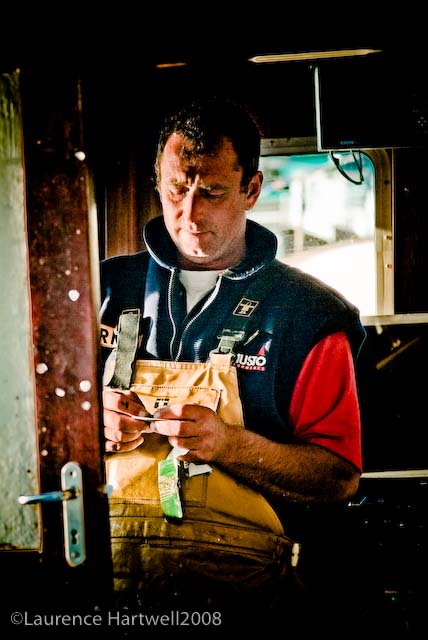
Newlyn's new assistant harbour master Paul Oliver, Ollie as he is better known to most, promises to be in touch with harbour users in this challenging new role...


Ollie has fished from Newlyn ever since he left school...


on a wide variety of boats from the sardine ring netters...


to big beam trawlers like the Sapphire II...


able to turn his hand to any job...


and a great team player!

Ollie can be contacted on deputyhm@newlynharbour.com