Wednesday, 17 June 2015
Md-week and Newlyn has plenty of inshore fish on the market and some visitors from the island of Sardinia.
Low cloud above the coastal path on the way to the fish market in Newlyn...
today's landing board...
inside the market Nathan de Rozarieux has a cheerful group of visiting Sardinian fishermen...
who have been marvelling at the size of the fish...
and the range of species on sale...
with some good landings of JDs from the inshore trawlers who are benefiting from a fine spell of weather in what is traditionally the worst month for them in terms of catch weight...
just a small selection of shellfish from a netter...
and a solitary but pristine red bream
amongst the turbot...
give the Sardinians something to talk about...
like these grey mullet...
these pots trawled up have been rolling around the sea bed for some time - many of the crab boats use different combinations of plastic in their pots to ID them should they get lost...
a brace of hake netters...
the Elisabeth Veronique has run off her bridles...
typical of today's fully equipped multi-purpose punts...
the all-singing-all-dancing new Shannon class lifeboat for Ilfracombe is in Newlyn if you fancy a look round...
it would appear that the Sardinians are less than impressed with the summer weather here in not-so-flaming June - coats wrapped round them with hoods up!...
trawlermen are always happy in their work...
even if it means stretching out the bridles and measuring them on the quay prior to taking on new warps...
Serene Dawn, the smallest of the newly accredited MSC hake boats
a lick of paint on the latest sardine boat...
a brace of MSC Cornish hake netters...
and another brace of MSC Cornish hake netters...
not quit as big as the Albion, the Rebecca T is another visiting scallop boat from Wales...
Tom cannot see so far today...
as low cloud persists in the Bay.
Cod Comeback: How The North Sea Fishery Bounced Back From The Brink
It's great to see good news making it into the media, especially when it's about the resurgence of fish in an area that has received so much bad press for twenty years - so it seems fitting that this story comes courtesy of an American site!
Cod love the icy cold waters of the North Sea — and British people love eating cod.
But a decade ago, it looked like people were eating the fish to the brink of collapse. Now the trend has turned around, and the cod are coming back. We pick up this fish tale, which seems to be on its way to a happy ending, at an early morning fish auction in Fraserburgh, Scotland, where buyers and sellers are lined up alongside hundreds of boxes containing cod, hake, monkfish, sole and every other kind of fish you can imagine from the North Sea.
This auction is not a place for fancy chefs and home cooks. The sales are in bulk, and most of the buyers and sellers here come from generations of fishermen. Like market superintendent Ian Buchan — he spent most of his life at sea, until it became just too hard to catch fish.
"People were saying there was no cod. Ten years before I stopped, at least 150 miles to get fish. Now, 20 miles. Fish is everywhere," Buchan says.
Everywhere.
A view of the fishing port in Fraserburgh, Scotland. A decade ago, fishermen trying to catch cod were coming up empty. Now the cod and hake catch is rebounding. A view of the fishing port in Fraserburgh, Scotland. A decade ago, fishermen trying to catch cod were coming up empty. Now the cod and hake catch is rebounding.
"We've seen a big explosion in the cod and hake," says Alan Mutch, who runs the fish salesmen's association here. "We're definitely seeing an upsurge in that. And in fact, now vessels — because of the restrictions on the amount they're allowed to land — vessels now have to steam to other areas to get away from cod."
This is a huge turnaround from just a decade ago, says Robin Cook, a scientist who used to run the region's fisheries research center. He's now with Strathclyde University in Glasgow. "Through much of my career, many of the stocks in European waters were in decline. And things were getting worse and worse and worse," Cook says. Back then, Cook was the go-to expert for stories on fishery collapse. He was quoted in programs with titles like Goodbye Fish and Chips and Costing the earth — In Cod We Trust.
Whereas today?
"It's interesting, you get a lot more interviews when things are bad than when things are getting better. So this is certainly quite a change," Cook says of our conversation.
In the late '90s, scientists say fishermen were pulling about 60 percent of the cod out of the water each year in the North Sea. It doesn't take an advanced math degree to calculate that that is unsustainable. So about 10 years ago, the government bought about half of the fishing boats in Scotland and destroyed them. The boats that kept working were put under strict regulations — the number of days they could spend at sea, the number of cod they could catch.
And to Cook, it looks like the program is working. "I certainly in the past would've avoided buying cod, whereas I wouldn't now," he says.
Most of the buyers and sellers at the Fraserburgh fish auction come from generations of fishermen.
It's not a perfect system.
Fishermen tell me they sometimes throw dead cod back in the water when they scoop them up with other fish. Otherwise, they'll be penalized for violating quotas.
In Fraserburgh, Mutch tells me he thinks this community can regulate itself. I note that some critics say that, if the industry is allowed to self-regulate, then every ship will be in a race to empty out the oceans. What does he think?
"I would've said 20 years ago, 15 years ago, possibly. But you've now got a breed of young fishermen who have gone through all the trauma that we've gone through. They realize that we can't do what we were doing before." He says the new crop of fishermen has seen what their parents went through and realize they can't return to the old ways. And there is a new generation coming on board.
Xander West gave up fishing almost 20 years ago when the fishery started collapsing. But his son, he says, has now taken up trawling. He says his son doesn't make a great living, but it's good enough. And he's just glad that his son can continue in the family business.
Full story courtesy of The Salt and Ari Shapiro/NPR - a wide ranging and informative food site from across the pond.
![]() |
| Cod - still the staple fish and chips diet for many Brits. |
But a decade ago, it looked like people were eating the fish to the brink of collapse. Now the trend has turned around, and the cod are coming back. We pick up this fish tale, which seems to be on its way to a happy ending, at an early morning fish auction in Fraserburgh, Scotland, where buyers and sellers are lined up alongside hundreds of boxes containing cod, hake, monkfish, sole and every other kind of fish you can imagine from the North Sea.
This auction is not a place for fancy chefs and home cooks. The sales are in bulk, and most of the buyers and sellers here come from generations of fishermen. Like market superintendent Ian Buchan — he spent most of his life at sea, until it became just too hard to catch fish.
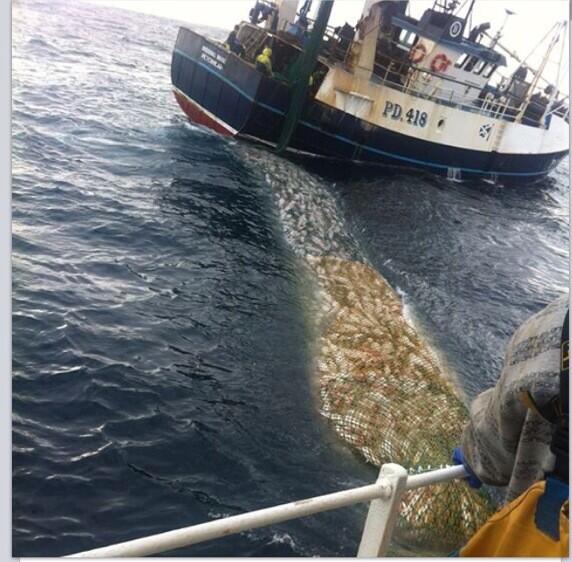
| Budding Rose taking a cod end and stocking full of cod from her pair partner Lapwing |
"People were saying there was no cod. Ten years before I stopped, at least 150 miles to get fish. Now, 20 miles. Fish is everywhere," Buchan says.
Everywhere.
A view of the fishing port in Fraserburgh, Scotland. A decade ago, fishermen trying to catch cod were coming up empty. Now the cod and hake catch is rebounding. A view of the fishing port in Fraserburgh, Scotland. A decade ago, fishermen trying to catch cod were coming up empty. Now the cod and hake catch is rebounding.
"We've seen a big explosion in the cod and hake," says Alan Mutch, who runs the fish salesmen's association here. "We're definitely seeing an upsurge in that. And in fact, now vessels — because of the restrictions on the amount they're allowed to land — vessels now have to steam to other areas to get away from cod."
This is a huge turnaround from just a decade ago, says Robin Cook, a scientist who used to run the region's fisheries research center. He's now with Strathclyde University in Glasgow. "Through much of my career, many of the stocks in European waters were in decline. And things were getting worse and worse and worse," Cook says. Back then, Cook was the go-to expert for stories on fishery collapse. He was quoted in programs with titles like Goodbye Fish and Chips and Costing the earth — In Cod We Trust.
Whereas today?
"It's interesting, you get a lot more interviews when things are bad than when things are getting better. So this is certainly quite a change," Cook says of our conversation.
In the late '90s, scientists say fishermen were pulling about 60 percent of the cod out of the water each year in the North Sea. It doesn't take an advanced math degree to calculate that that is unsustainable. So about 10 years ago, the government bought about half of the fishing boats in Scotland and destroyed them. The boats that kept working were put under strict regulations — the number of days they could spend at sea, the number of cod they could catch.
And to Cook, it looks like the program is working. "I certainly in the past would've avoided buying cod, whereas I wouldn't now," he says.
Most of the buyers and sellers at the Fraserburgh fish auction come from generations of fishermen.
It's not a perfect system.
Fishermen tell me they sometimes throw dead cod back in the water when they scoop them up with other fish. Otherwise, they'll be penalized for violating quotas.
In Fraserburgh, Mutch tells me he thinks this community can regulate itself. I note that some critics say that, if the industry is allowed to self-regulate, then every ship will be in a race to empty out the oceans. What does he think?
"I would've said 20 years ago, 15 years ago, possibly. But you've now got a breed of young fishermen who have gone through all the trauma that we've gone through. They realize that we can't do what we were doing before." He says the new crop of fishermen has seen what their parents went through and realize they can't return to the old ways. And there is a new generation coming on board.
Xander West gave up fishing almost 20 years ago when the fishery started collapsing. But his son, he says, has now taken up trawling. He says his son doesn't make a great living, but it's good enough. And he's just glad that his son can continue in the family business.
Full story courtesy of The Salt and Ari Shapiro/NPR - a wide ranging and informative food site from across the pond.
Monday, 15 June 2015
MSC certified Cornish hake landed for the first time in Newlyn.
Taking a shore rope from the crabber Emma Louise...
time to do the gear on the beam trawler Admiral Gordon...
a full set of scallop dredges on the Albion...
as skipper Billy Worth welcomes the crew back aboard the boat as the refit nears completion...
fuel time for the inshore trawler Millenia...
Paul Trebilcock from the CFPO and skipper Alan Dwan celebrate the big day - after six years in the planning MSC Certified Cornish Hake becomes a reality - all we need now is for the supermarkets to buy Cornish and not South African hake!...
crew Sean and Ashley on the Govenek of Ladram celebrate the good news...
while skipper Simon Porter lands his first haul of Cornish hake form the Karen of Ladram...
bound away again...
fill that lorry Simon!...
the wreck netter Trevose has taken ice...
ex-skipper Kenny Downing checks out the new multipurpose hauler form Spencer Carter on his latest project...
bog boats need lots of fuel oil...
the Ajax landing hake...
Mario's temporary command while he 'takes it easy'...
most of the hake fleet are in now.
The best news for Newlyn in years! - Cornish hake is MSC certified as sustainable
Cornish hake is MSC certified as sustainable!
It's smiles all round from the boys who catch hake!
After years of seeing South African hake on the wet fish counters of supermarkets throughout the UK despite fishermen seeing an abundance in our own waters
Local speciality fish, Cornish hake, has achieved Marine Stewardship Council (MSC) certification as a sustainable and well-managed fishery. This latest recognition means that, subject to strict traceability requirements, Cornish hake can be branded with the widely-recognised blue fish ecolabel.
A sustainable success
Cornish hake has been a popular species for many years, but the stock was left slightly depleted in the late 1990s. Now, thanks to sacrifices by fishermen and a new management plan set up in 2001, hake stocks have recovered to nearly double their low point.
One of the fishery’s key strengths is the use of nets with larger mesh size than the legal requirement. These nets only target the larger hake fish and allow the smaller, juvenile fish to swim free, leaving more fish to reproduce.
A local fishery and interesting species
Cornish fishermen work from a fleet of 15 boats catching hake in the Celtic Sea to the west of the UK mainland and south of Ireland. Together they land just under 1,000 tonnes of European hake (Merluccius merluccius) per year into Newlyn, Cornwall from the boats, which range from 12 metres to nearly 23 metres long.
European hake are found along the continental shelf and the shelf slope in the north-eastern Atlantic from northern Norway and Iceland south to Mauritania. They normally live at depths of 100-300 m from Ireland south to Gibraltar and in the Mediterranean Sea.
![]() |
| In the fishroom, Cornsih hake are carefully boxed and iced at +2ÂșC |
The main market for Cornish hake is in Europe, particularly Spain, France & the UK. Fish are sold as fresh, whole, gutted fillets and steaks into retail and restaurants.
Laky Zervudachi, Sustainability Director of seafood specialists Direct Seafoods welcomed the certification: “Direct Seafoods are really excited at the recent news that Cornish hake is due to receive its MSC certification. This will be a great opportunity for us to promote a local UK sourced fish that is available in significant volumes and tastes delicious. This certification will have a significant impact in raising public awareness in the MSC, as it highlights a truly local fish that is readily available and has been growing in popularity with chefs up and down the country.”
Claire Pescod, UK Fisheries Outreach Manager, said: “This is excellent news that Cornish hake has achieved MSC certification. They have put in a lot of hard work and it is great that their long-standing efforts have been officially recognised. I’m delighted that there is another certified British species to help meet consumer demand for sustainable seafood – Cornish hake is a fantastic British species and we’re already seeing interest from restaurants who want to add MSC hake to their menu.”
Retail support
The Co-operative Group set up a £200,000 fund to help support fisheries complete the Marine Stewardship Council (MSC) certification process in 2010. The Cornish gill-net hake fishery is the fourth fishery in the south west to be supported through the MSC assessment process by the retailer and is the first to gain MSC certification.
Stuart Smith, Technical Manager with The Co-operative Food, said: “We are pleased to hear that the Cornish hake fishery has achieved MSC certification and we will be reviewing opportunities to use MSC certified Cornish hake in our seafood range.
“Our key principles are supported by MSC certification. They include a fully traceable seafood supply chain, independent evaluation and certification to internationally recognised standards, a commitment to continuous improvement to meet with future requirements, and to be flexible to changes in scientific advice.”
Industry rising to the challenge
“We are proud of how the industry has responded to the challenge of working with scientists to better understand the state of fish stocks and where action has been needed to improve stocks it has been taken. What better way to demonstrate that than going through MSC assessment“, said Paul Trebilcock, CEO of the Cornish Fish Producers Organisation (CFPO), which is leading the move for certification.
The CFPO was established in 1976 as a non-profit making co-operative, and today consists of 210 fishing vessel-owning members from all over Cornwall. It represents the views of Cornish fishermen locally, nationally and internationally.
About Marine Stewardship Council (MSC)
The Marine Stewardship Council (MSC) is an international non-profit organization. Our vision is for the world’s oceans to be teeming with life, and seafood supplies safeguarded for this and future generations. Our ecolabel and certification program recognises and rewards sustainable fishing practices and is helping create a more sustainable seafood market.
The MSC ecolabel on a seafood product means that:
· It comes from a wild-catch fishery which has been independently certified to the MSC’s science-based standard for environmentally sustainable fishing.
· It’s fully traceable to a sustainable source.
More than 260 fisheries in over 30 countries are certified to the MSC’s Standard. These fisheries have a combined annual seafood production of almost nine million metric tonnes, representing close to 10% of annual global yields. More than 27,000 seafood products worldwide carry the MSC ecolabel.
For more information visitwww.msc.org
Subscribe to:
Comments (Atom)